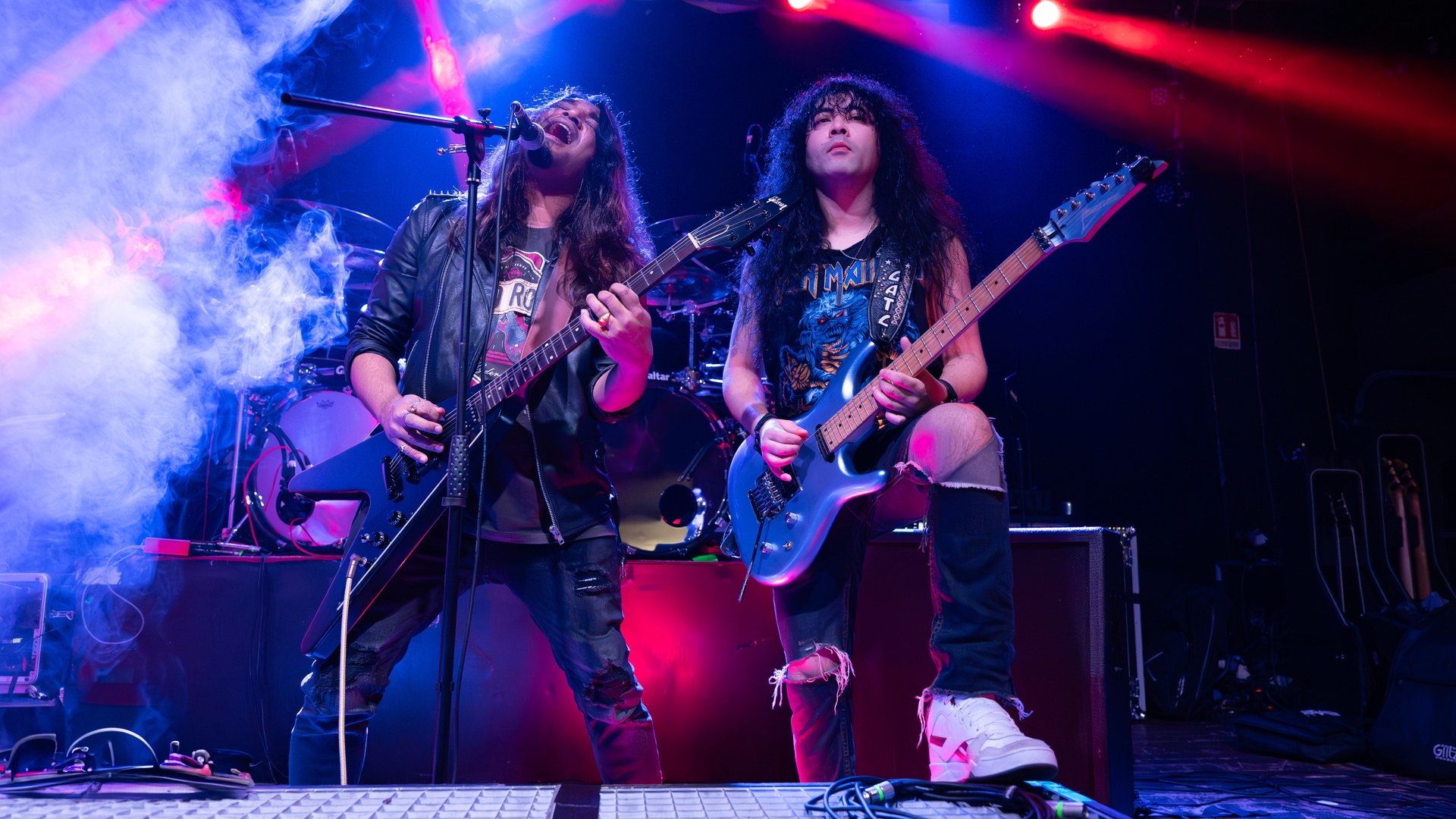
Search for Indian indie bands and you mostly get name lists: forty bands in a row, no dates, no records, no reason to press play on one before another. This page tries to do the job those lists skip. Each entry gives a band, where it came from, one or two dated facts from its catalogue, and one record or song to start with. It is an archive, not a ranking, and it only covers music that has been released.
"Indie" in India has always meant two things at once. One is a sound: guitar bands, singer-songwriters, a certain kind of English or Hindi lyric. The other is a position: music made outside the Bollywood soundtrack system, usually self-released or put out on a small label. The bands below sit somewhere on both lines. Some, like Indian Ocean, began long before anyone called this a scene. Others, like The Local Train, became the scene's mainstream. For the full background, read our guide to Indian independent music and the timeline. If you want albums rather than bands, go to our listening guide to essential Indian independent albums.
The founders: bands that built the circuit
Indian Ocean (New Delhi). Susmit Sen's father suggested the name in 1990, after years of the guitarist playing as a duo with Asheem Chakravarty; the self-titled debut followed in 1993, long on instrumentals and short on vocals. Kandisa, released in March 2000 on Times Music, is the record most listeners start with: its title track takes an Aramaic prayer and turns it into something that sounds like it was always a Delhi song. Why start here: almost every fusion band after them is either following this record or arguing with it. Source: Indian Ocean.
Parikrama (New Delhi). Formed in 1991, when Subir Malik wanted one last run at rock before joining the family motor-parts business. The band committed to original songs in 1995, and a money-losing Mood Indigo set at IIT Bombay that December led to bookings at Rock Yatra and Independence Rock. Parikrama built its name on stage rather than on albums, so start with a song: "But It Rained", written after a 1995 report on tourists kidnapped in Kashmir, with a video released in 2001. Source: Parikrama.
Motherjane (Kochi). The band began in 1996 to fill a cancelled slot at a St Albert's College festival in Kochi. Baiju Dharmajan joined around 1999, and Insane Biography (2002) came first. Maktub (2008) is the record to hear: Carnatic phrasing inside progressive rock, from a line-up that opened the first Rock in India festival that year. Listening order: Maktub first, then back to Insane Biography to hear how far the guitar language moved. Source: Motherjane.
Thermal and a Quarter (Bengaluru). "Bangalore rock" in its purest form: tight, funny, guitar-led, and fiercely independent about how it releases music. After Dotcom (2000) and the concept album Jupiter Cafe (2002), the band put Plan B online on 15 January 2005 as a free download under a modified Creative Commons licence, years before pay-what-you-want became a global story. This Is It followed in 2009. Start with Plan B. Source: Thermal and a Quarter.
Avial (Kochi). Formed in 2003, the band proved Malayalam lyrics could sit on alternative rock without apology. The self-titled album, released on 8 February 2008 with eight songs, won six of the seven Jack Daniel's Rock Awards that year. It is still their only studio album, which makes the listening order simple: play it front to back, starting with "Nada Nada". Source: Avial.
Indus Creed (Mumbai). Founded in 1984 by guitarist Mahesh Tinaikar as Rock Machine, whose Rock 'n' Roll Renegade (1988) is often called India's first all-original rock album. The band became Indus Creed in the early 1990s, and "Pretty Child" became its best-known song. Four albums run up to Evolve (2012, Universal Music). Tinaikar died in Mumbai on 15 October 2026. Start with "Pretty Child", then Evolve to hear the reunion line-up. Source: Indus Creed.
The 2000s and early 2010s: when the scene got a name
Swarathma (Bengaluru). Kannada and Hindi folk-rock with a theatrical live show and lyrics that care about the street outside. The band began among art students in Mysore, relaunched in 2002, and won Radio City Live in 2008 with a record deal as the prize. Three studio albums followed: Swarathma (2009), Topiwalleh (2012) and Raah-e-Fakira (2018). Start with the debut, then Topiwalleh for the sharper satire. Source: Swarathma.
The Raghu Dixit Project (Bengaluru). Raghu Dixit's band carried Kannada folk melodies to international festival stages. The self-titled debut (2008) carried "Mysore Se Aayi", "Ambar" and the lead single "Hey Bhagwan", and was sold largely at the band's own gigs. A Later... with Jools Holland slot (2010) and Glastonbury in 2011 and 2015 followed; the 2024 album Shakkar brings the catalogue up to date. Start with the debut. Source: The Raghu Dixit Project.
Agam (Bengaluru). Carnatic progressive rock, built around long-form compositions rather than radio songs, sung in Telugu, Sanskrit, Tamil and Malayalam. The band formed in 2003 around vocalist Harish Sivaramakrishnan and played live as a full line-up from 2007, the year it was among the winners of Sun TV's band hunt. Agam reward patience: listen to one long piece in full before judging. Source: Agam.
Thaikkudam Bridge (Kochi). A big-ensemble band that began in 2013 as a one-off for Kappa TV's Music Mojo, with cousins Govind Menon (now Govind Vasantha) and Siddharth Menon. The debut album Navarasam came out in late 2015; its title song later became the subject of a 2022 legal dispute with the film Kantara. Start with Navarasam, and end with "Thekkini", its nine-minute closer. Source: Thaikkudam Bridge.
Parvaaz (Bengaluru). Kashmiri and Urdu lyrics over psychedelic rock. Na Gul Na Gulistan was released on 5 December 2025 via AWAL, the band's first album after the pandemic years. Our review is the place to start: Na Gul Na Gulistan.
Aswekeepsearching (Ahmedabad). Post-rock that slowly added Hindi vocals and atmosphere. The Growing Suspicions EP arrived on 14 February 2014; the debut album Khwaab reached listeners worldwide on 12 October 2015 through the Russian label Flowers Blossom in the Space. Zia (28 April 2017) and Rooh (27 September 2019) followed. Listening order: Zia, then Rooh. Source: Aswekeepsearching; more in Indian post-rock bands.
Coshish (Mumbai). Hindi alternative and progressive rock with political edges. The band began as a duo and had become a prog quartet by early 2008. Its concept album Firdous (2013) took years; Rolling Stone India noted recording finished in early 2012 and the delay became a fan joke. Start with "Raastey", the album's first single. Source: Coshish.
The streaming generation
The Local Train (Chandigarh, later New Delhi). Raman Negi, Ramit Mehra and Sahil Sarin formed the band in Chandigarh in 2008; Paras Thakur joined in 2011. "Choo Lo" went viral in 2013, two years before it appeared on the debut Aalas Ka Pedh (25 September 2015). Negi left in 2022. Why start here: this is the record that made Hindi rock the default sound of Indian indie in the late 2010s. Then try Vaaqif. Source: The Local Train.
Peter Cat Recording Co. (New Delhi). Founded by Suryakant Sawhney in 2009. Gypsy jazz, crooner pop and late-night melancholy, across Sinema (2011), Climax (2015), Bismillah (2019) and BETA बेटा (9 August 2024). Bismillah, the first album by the current five-piece, was recorded partly in Paris and is the record that took them abroad; "Floated By" is the easiest entry point. Source: Peter Cat Recording Co. members.
When Chai Met Toast (Kochi). Formed in 2016; sunny, multilingual folk-pop in English and Hindi with Tamil and Malayalam lines, which found its audience online first. Joy of Little Things came out in 2017, and When We Feel Young was released in stages through 2020. Start with "Joy of Little Things", then "Kahaani", their first fully Hindi song. Source: When Chai Met Toast members.
The Yellow Diary (Mumbai). Hindi pop-rock built around big choruses. The band started in 2015 when Rajan Batra and Himonshu Parikh wrote "Marz", released that October; the first full album, In Case We Forget, arrived in November 2025. Start with "Marz" for the origin, then the album. Source: The Yellow Diary.
The F16s (Chennai). English-language indie rock with a synth sheen. Their 2026 album All Dogs Go To Heaven is in our albums catalogue, the best place to check the tracklist before you press play.
Easy Wanderlings (Pune). An eight-member band formed in 2015, mixing ambient soul, pop and folk. The crowdfunded debut As Written in the Stars came out in August 2017; the My Place to You EP (2019) and Caught in a Parade EP (2022) followed, the latter carrying "Enemy". Start with "Enjoy It While It Lasts". Source: Easy Wanderlings songs.
Fiddlecraft (Pune). A pop-rock band made official on 1 April 2015, grown out of an office event two years earlier, with a line-up that has shifted around its singer. Source: Fiddlecraft.
Naalayak (Chandigarh). The project of singer-songwriter Sahil Samuel, Hindi-Urdu pop-rock that began on the college circuit around 2015. Apple Music dates the Naalayak EP to 12 April 2018 and Main Ka Bukhar to 25 June 2018: start with those two EPs. Source: Naalayak.
The Lost Symbols (Jaipur). Formed in 2012 in Jalandhar, the band dissolved around 2015 and reformed in Jaipur in 2019. Singles began in 2020 with "Khwaab", and the debut album The Diary followed in 2021 (then Gharq, FAROGH and Taysa). Start with The Diary. Source: The Lost Symbols.
Heavier: metal and its fusions
Bloodywood (New Delhi). Formed in 2016 by Karan Katiyar and Jayant Bhadula, with rapper Raoul Kerr joining in 2019: metal with Punjabi folk, dhol and rap, built online before it was built on stage. Rakshak (2022) is the full-length debut; Nu Delhi followed on 21 March 2025 via Fearless Records. Start with Rakshak. Source: Bloodywood members and albums.
Kryptos (Bengaluru). Classic heavy metal, played straight, since 1998. Seven studio albums run from Spiral Ascent (2004) to Decimator (5 July 2024); AFM Records has released them since The Coils of Apollyon (2012). Start with The Coils of Apollyon. Source: Kryptos.
Pineapple Express (Bengaluru). Progressive metal with Indian classical colour. The current line-up dates from October 2016; the Uplift EP (March 2018) and Deja Vu EP (August 2019) came before Passages (August 2020), made during lockdown. Start with Passages. Source: Pineapple Express. More in Indian metal bands.
A listening order if you're new
If you only have an evening, play these in order: Indian Ocean's "Kandisa", Avial's "Nada Nada", Swarathma's debut, The Local Train's "Choo Lo", Peter Cat Recording Co.'s "Floated By", and one Bloodywood track from Rakshak. That run covers three decades, four languages and most of the stylistic ground on this page. From there, follow whichever city or sound grabbed you.
By city
- Mumbai indie bands
- Delhi bands lineup
- Bengaluru bands lineup
- Kolkata and Bengali bands
- Northeast India bands
- Malayalam indie bands
By sound
Rock · Progressive · Psychedelic · Shoegaze · Punk · Folk fusion · Sufi rock · Blues
How we chose
A band qualifies if it is Indian, has released original music outside the film-soundtrack system, and has at least one record we can point to. Popularity alone did not decide the list, and we do not publish stream counts. Dates come from our artist pages, which cite their own sources. Newer bands are tracked in New Indian indie bands 2026.
FAQ
What is the most popular Indian indie band? By visibility, bands like The Local Train and The Yellow Diary lead their generation; by longevity, Indian Ocean and Parikrama. We don't publish stream counts. Which Indian indie band should I start with? Indian Ocean's Kandisa for history, The Local Train's Aalas Ka Pedh for the modern Hindi sound, Peter Cat Recording Co.'s Bismillah for something stranger. What is the oldest Indian rock band still active? Indus Creed traces back to Rock Machine in 1984; Parikrama has played since 1991. Are Indian indie bands signed to labels? Most self-release or work with small independent labels; see Indian independent record labels.
Discography is an independent music magazineHow to get coveredRelease music in IndiaIndian indieIndian indie bandsAbout