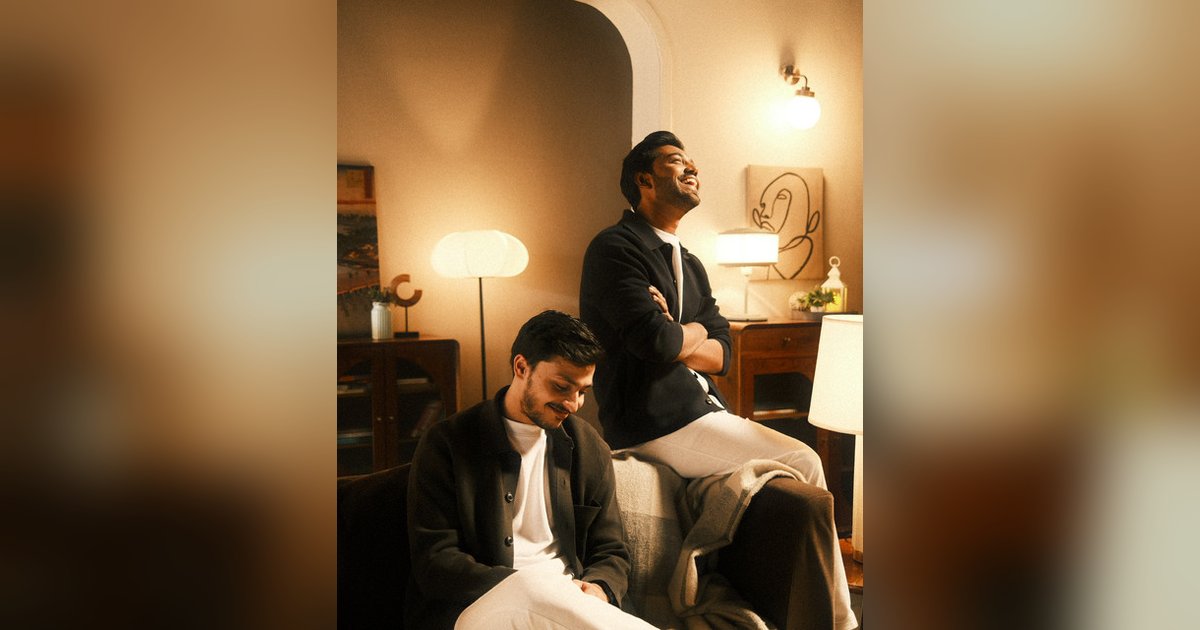
Divyam Sodhi and Khwaab have six songs between them on Spotify's RADAR India playlist this morning, which is a lot of room on a 75-track list meant for new names. At our snapshot at 5:32 AM IST on 17 October 2026, the Karnal-raised singer and the Mumbai producer (Khwaab is the moniker of Nishant Nagar) held No. 41 with Aas, No. 43 with Marham, No. 46 with Piya, No. 67 with Kya Kahein and No. 75 with Kaise Ho Tum. Khwaab's Jaane Bhi Do, with Pavithra Chari and Rahul Shah, sat at No. 66. Marham was also No. 35 on Indie India.
They are not new. Their first song together, Bohot Bechain, came out in May 2021. So this is less a discovery than a check-in, five years on, with a pair who have quietly built one of the more distinctive catalogues in Hindi indie pop. I like a lot of it. I am less sure about where the newest song is pointing.
Divyam Sodhi and Khwaab at a glance
- Divyam Sodhi: singer and composer from Karnal, Haryana (Rolling Stone India, May 2025); on Instagram and YouTube as @divyamsodhi
- Khwaab: moniker of Nishant Nagar, a Mumbai-based producer, composer and singer (Indulge Express, May 2020)
- First release together: Bohot Bechain, 14 May 2021, ℗ 2021 Khwaab
- Album: Haal-e-Dil, 6 December 2024, seven songs, ℗ 2024 first.wav, Exclusive Licensee Universal Music India
- EP: Ehsaas, 26 September 2025, four songs, ℗ 2025 Sony Music Entertainment India
- Latest duo single: Marham, 16 July 2026, lyrics by Aditi Raj, ℗ 2026 Sony Music Entertainment India
- Spotify at about 5:32 AM IST, 17 October 2026: Divyam Sodhi 365,750 monthly listeners; Khwaab 521,293
A singer raised on two cassettes
Divyam Sodhi's story, as he has told it, starts with a small tape collection. In a December 2024 interview with The Indian Music Diaries he said he is the third generation of musicians in his family, and that the cassettes at home were of Nusrat Fateh Ali Khan and Ghulam Ali. He sang on a children's show, Awaaz Punjab Di, at eight and a half, spent three years in the music department at Kurukshetra University, auditioned for A.R. Rahman's talent show ARRived, and started posting covers on Instagram around 2015-16 because his cousin Karan kept telling him to.
What I find useful in that interview is how unsentimental he is about the covers. "You can't just be famous from doing covers, from singing someone else's songs," he said. "It is a great way to bring people in, though." That is a working musician's view of Instagram, and it is more or less how he met his producer.
The producer who used to play bass
Khwaab came first. In May 2020, Indulge Express introduced Nishant Nagar as a Mumbai producer who had been in the Delhi band The Revisit Project and was then playing bass for Raghav Meattle and Jasleen Royal. Chaar Raste, his first single under the new name, featured Siddharth Basrur and carries a ℗ 2020 Nishant Nagar line on Apple Music. He told the paper he wanted to fuse meaningful Hindi lyrics with his style of production.
Sodhi says the two met in lockdown, after a mutual friend called Varun tagged Nagar under one of his videos. "I do not remember who texted who first, but then we made Bohot Bechain," he told The Indian Music Diaries. Later in the same interview: "It is a duo, at this point." Neither has dropped his own name, and the billing still swaps order from song to song. We have written before about producers getting billed on Indian indie collabs. Khwaab has been billed from the start.
What the songs sound like, preview by preview
A caveat first: what follows comes from Apple Music's 30-second previews, which I ran through a level and frequency meter, read alongside the credits and lyrics the pair have published. A preview is a slice, not a song, and the judgments below are only as good as that slice.
Piya is the one most people know. Spotify showed 4,006,921 plays at about 5:36 AM IST, the most of any song credited to the pair, and it runs 2:21, which is short even by current Indian indie standards. What strikes me in the preview is how little sits underneath Sodhi's voice. By my measurement, barely 1 percent of the preview's energy sits below 120 Hz. There is no bass to speak of, and the level rises and falls by about 7 dB across the clip instead of sitting flat. Sodhi told The Indian Music Diaries that "you can sing Piya" and "you cannot sing Bohot Bechain". The space around the voice is a big part of why.
Aas, from March 2026, is the one I would point a newcomer to. Aaghaz wrote the words, Khwaab produced it, and the credits on the official video list sitar by Soumendra Goswami and tabla by Mahavir. The preview has a slow pulse, around 80 beats a minute on my rough count, and the lyric posted with the video ends by repeating "nainon ki tu hi hai aas" four times. By the meter it is fuller than Piya, with about 16 percent of its energy below 120 Hz, but nowhere near crowded. Spotify showed 1,477,769 plays for it this morning.
Kya Kahein, from March 2025, does something I wish they did more often. About eight seconds into the preview the track almost stops, dropping more than 10 dB for a moment before the level comes back. Rolling Stone India's Anurag Tagat described its "unmistakable nostalgia", and Khwaab told him the song "went through multiple iterations until we found the right balance of vulnerability and simplicity." Kaise Ho Tum, also on Ehsaas, has a similar shape in its preview: it falls back by about 10 dB a few seconds in, then returns much louder for the last third of the clip.
Marham, and a heavier sound
Marham, released on 16 July 2026, is the newest duo single and the one they are pushing hardest right now: it is on both playlists and is the artist pick on both of their Spotify pages. Aditi Raj wrote it; the credits on Sodhi's YouTube upload list Khwaab on guitars, Mahavir on tabla and dholak, Soumendra on sitar and Aman Dhiman on harmonium. The hook, "unki awaaz, jaise dawa", is lovely on paper.
The preview is a different animal from Piya. It is roughly 5 dB louder on average, it holds within about 1 dB for the first 13 seconds, and more than a third of its energy sits below 120 Hz, against barely 1 percent for Piya. You can be fond of a pair and still say this: a louder, bass-forward finish seems to me the wrong frame for what Rolling Stone India called Sodhi's "ghazal-informed vocal texture". On the meter, Marham reads like a song mastered to compete. Piya's preview, by the same meter, is not competing with anything.
That is a judgment from 30 seconds, and the full song may open up. But it is worth noting that Marham had 389,501 Spotify plays this morning, three months in, while Aas had more than 1.4 million at seven months. I would not read much into that alone. I would read a little.
Who puts the songs out
The ℗ lines tell a slightly tangled story. Bohot Bechain was ℗ Khwaab. Haal-e-Dil and Aas are ℗ first.wav, with Universal Music India as exclusive licensee; Sodhi described first.wav as a team "made entirely up of artists" around Raghav Meattle. Kya Kahein, Kaise Ho Tum, the Ehsaas EP and Marham are ℗ Sony Music Entertainment India, although Marham's YouTube credits still list Meattle and first.wav for management and A&R. Jaane Bhi Do, Khwaab's August single, is ℗ to Khwaab, Pavithra and Rahul Shah themselves.
None of this is unusual now, and we have written about who ends up owning Indian indie masters. It does mean the "independent duo" label needs a footnote. Public credits do not say what deals sit behind the Sony releases. What they show is an artist-run label on some songs, a major on others, and the artists themselves on one.
RADAR, five years in
RADAR India's description promises the "most exciting artists from the Indian Indie scene". Its cover star this morning is Anubha Bajaj, whose Ishaare is No. 1. That a pair with a 2021 debut fills six slots says something about how Spotify's Indian indie playlists work as gatekeepers: it rewards steady release schedules and a catalogue that keeps listeners on the platform, not just newness.
I do not mind it here. Divyam Sodhi has one of the more recognisable voices in this corner of Hindi pop, and Khwaab has mostly known when to leave it alone. In a September 2026 episode of FlixBus's Window Seat series, according to a LinkedIn post by Surya Khurana, they played three unreleased songs, Khumaari, Dil Lagaana and Saah, with live tabla by Mahavir Chandrawat. I have not heard them. I would like at least one of the three to be as bare as Piya.
FAQ
Who are Divyam Sodhi and Khwaab?
Divyam Sodhi is a singer and composer from Karnal, Haryana, and Khwaab is the moniker of Mumbai-based producer, composer and singer Nishant Nagar. They have released music together since Bohot Bechain in May 2021, including the album Haal-e-Dil (2024), the EP Ehsaas (2025) and the singles Aas and Marham (2026).
What is Khwaab's real name?
Khwaab is Nishant Nagar. Indulge Express reported in May 2020 that he had taken the moniker for his first single as producer and composer, Chaar Raste, featuring Siddharth Basrur. Sodhi also refers to him as Khwaab (Nishant Nagar) in his 2024 interview with The Indian Music Diaries.
Where is Divyam Sodhi from?
Rolling Stone India and News18 both describe Divyam Sodhi as coming from Karnal in Haryana. He studied at Kurukshetra University, according to his interview with The Indian Music Diaries.
What is Haal-e-Dil?
Haal-e-Dil is the seven-song album by Khwaab and Divyam Sodhi, released on 6 December 2024 with a ℗ 2024 first.wav, Exclusive Licensee Universal Music India line. It includes Piya, Kaise Keh Dein, Baalam, Tum Jo, Tere Sang, Raaton Ki and Choti Si Kahaani.
Which Divyam Sodhi and Khwaab songs are on RADAR India?
At 5:32 AM IST on 17 October 2026: Aas (No. 41), Marham (No. 43), Piya (No. 46), Kya Kahein (No. 67) and Kaise Ho Tum (No. 75), plus Khwaab's Jaane Bhi Do with Pavithra Chari and Rahul Shah (No. 66). Playlist positions change often.
Sources
- Spotify, RADAR India playlist (positions at 5:32 AM IST, 17 October 2026): https://open.spotify.com/playlist/37i9dQZF1DWTAtTdFMiJYK
- Spotify, Indie India playlist (Marham at No. 35, 5:32 AM IST, 17 October 2026): https://open.spotify.com/playlist/37i9dQZF1DX5q67ZpWyRrZ
- Spotify, Divyam Sodhi artist page (365,750 monthly listeners; play counts at about 5:32 AM IST): https://open.spotify.com/artist/2oMbrqAZWD6lTVRPppXlr5
- Spotify, Khwaab artist page (521,293 monthly listeners; Kachaudi Gali 4,574,476 plays): https://open.spotify.com/artist/1fQt9x3P87d8ggkdU2hUDx
- Spotify, Haal-e-Dil album (Khwaab and Divyam Sodhi; seven songs): https://open.spotify.com/album/08MA1gXMtK4u5dmsyJEURe
- Spotify, Piya (Haal-e-Dil, 6 December 2024; 2:21; 4,006,921 plays at about 5:36 AM IST): https://open.spotify.com/track/067DbzLwQzTCkhz7Aw4GN8
- Spotify, Aas (26 March 2026; ℗ 2026 first.wav, Exclusive Licensee Universal Music India; 1,477,769 plays): https://open.spotify.com/track/7MLSIlkM9B2NhKMlAFRQc7
- Spotify, Marham (16 July 2026; ℗ 2026 Sony Music Entertainment India; 389,501 plays): https://open.spotify.com/track/4vgWEM1dc8S3JMjHrSdFTo
- Spotify, Kya Kahein (19 March 2025; ℗ 2025 Sony Music Entertainment India; 1,487,577 plays): https://open.spotify.com/track/1v6g0O3B9MmLPW8jNKPSQg
- Spotify, Kaise Ho Tum (10 June 2025; ℗ 2025 Sony Music Entertainment India; 739,975 plays): https://open.spotify.com/track/3Uwok7aLLQyXhfqNlekSim
- Spotify, Jaane Bhi Do (13 August 2026; ℗ 2026 Khwaab, Pavithra, Rahul Shah; 98,086 plays): https://open.spotify.com/track/3kjUjZmSctzPB5IpsnYhDC
- Apple Music, Haal-e-Dil (6 December 2024; seven songs; ℗ 2024 first.wav, Exclusive Licensee Universal Music India; 30-second previews): https://music.apple.com/in/album/haal-e-dil/1781431515
- Apple Music, Ehsaas EP (26 September 2025; ℗ 2025 Sony Music Entertainment India): https://music.apple.com/in/album/ehsaas-ep/1841875131
- Apple Music, Bohot Bechain (14 May 2021; ℗ 2021 Khwaab): https://music.apple.com/in/album/bohot-bechain-single/1565807701
- Apple Music, Khwaab artist page and catalogue (Chaar Raste, 1 May 2020, ℗ 2020 Nishant Nagar): https://music.apple.com/in/artist/khwaab/1509947489
- Apple Music, Divyam Sodhi artist page: https://music.apple.com/in/artist/divyam-sodhi/1450915551
- YouTube, Divyam Sodhi, Marham (Music Video), with audio credits and lyrics, 16 July 2026: https://www.youtube.com/watch?v=IZPaf2UBgXc
- YouTube, Divyam Sodhi, Aas (Music Video), with audio credits and lyrics, 25 March 2026: https://www.youtube.com/watch?v=h-5eorxdwi4
- The Indian Music Diaries, Saptaparna Samajdar, In Conversation With Divyam Sodhi, 16 December 2024: https://theindianmusicdiaries.com/i-belong-to-a-family-of-musicians-and-i-am-the-third-generation-to-do-so-in-conversation-with-divyam-sodhi/
- Rolling Stone India, Anurag Tagat, Divyam Sodhi and Khwaab on How Their Friendship Drives Their Music, 8 May 2025: https://rollingstoneindia.com/divyam-sodhi-khwaab-kya-kahein-new-song-video/
- Indulge Express, U. Roy, Nishant Nagar talks about his new moniker and soulful new single Chaar Raste, 7 May 2020: https://www.indulgexpress.com/culture/2020/May/07/nishant-nagar-talks-about-his-new-moniker-and-soulful-new-single-chaar-raste-24770.html
- News18, Yatamanyu Narain, Divyam Sodhi And Khwaab On Reimagining Nit Khair With Stillness, 3 August 2025: https://www.news18.com/movies/bollywood/divyam-sodhi-and-khwaab-on-reimagining-nit-khair-with-stillness-like-sunlight-on-an-empty-rooftop-exclusive-ws-kl-9481687.html
- LinkedIn, Surya Khurana, post on FlixBus Window Seat episode 3 with Divyam Sodhi and Khwaab, September 2026: https://www.linkedin.com/posts/surya-khurana-0a2ab866_divyamsodhi-khwaab-windowseat-activity-7502976634866716672-XttS
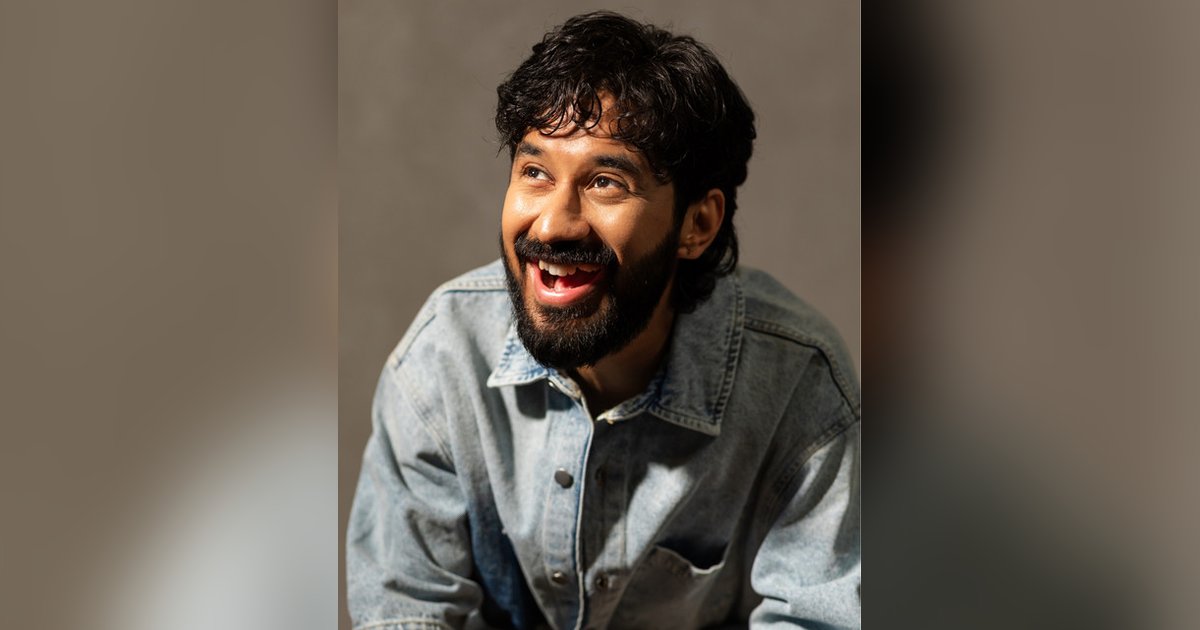
Cover: Divyam Sodhi (left) and Khwaab (Nishant Nagar, right), from the official artist photos on their Spotify artist pages (photographers not credited); placed side by side on a blurred, darkened extension of the same photos at 1200×630 by discography.in. Source: https://open.spotify.com/artist/2oMbrqAZWD6lTVRPppXlr5.
Discography is an independent music magazineHow to get coveredRelease music in IndiaIndian indieIndian indie bandsAbout