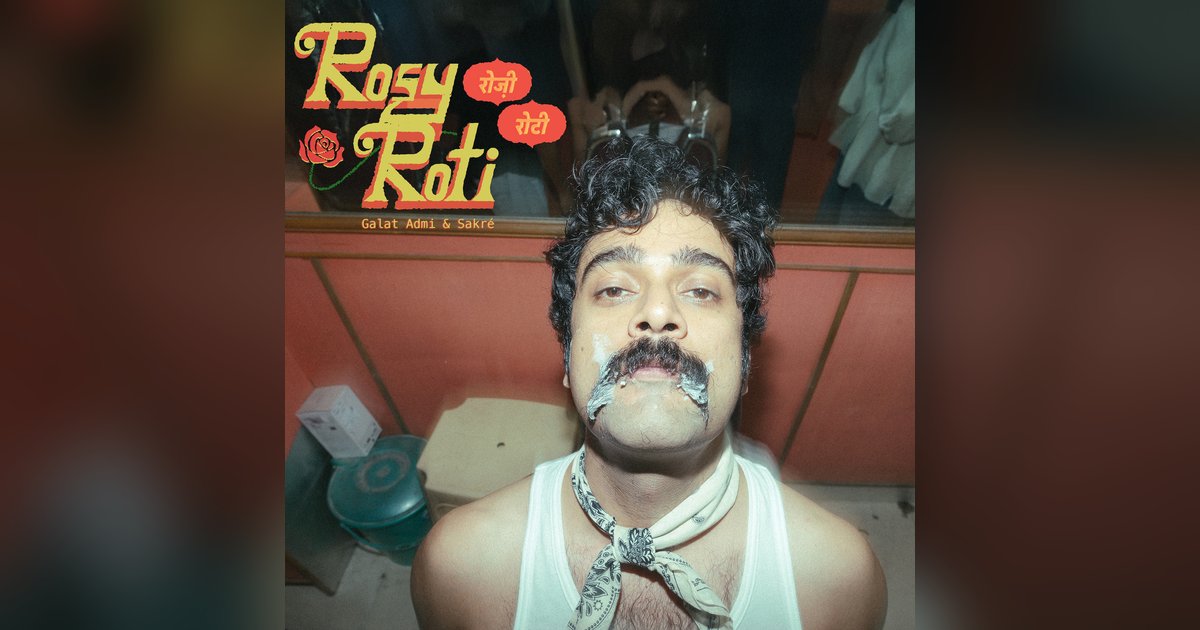
Look at No. 1 on Fresh Finds India and you see two names. Bhool Ja is billed to Galat Admi and Sakré, and Apple Music's credits explain why: Galat Admi sings, writes and co-produces, while Sakré is listed as performer, composer and producer. Scroll down to No. 17 on Rock in India and you find another song called Keh Do Na. That one is billed to Swastik The Band, and nobody else.
The two playlists this publication lives by speak two grammars of credit. At 4:27 PM IST on 15 October 2026, we logged every artist name on all 150 slots of Fresh Finds India and Rock in India, then checked Apple Music's credits and the ℗ line behind each song that billed more than one person. Our finding: Indian indie collabs on the discovery list are not mostly duets. They are the producer stepping onto the tile. The rock canon still bills the band as one body, and when a guest walks in, it usually says so with "feat."
Indian indie collabs at a glance
- Fresh Finds India: 25 of 50 songs bill two or more artists. Rock in India: 24 of 100.
- Fresh Finds India puts 81 different names on 50 songs, and none appears more than twice. Rock in India needs 100 songs to reach 95 names, and its most repeated names are bands: Parikrama, Antariksh and The Lost Symbols, five songs each.
- In 15 of Fresh Finds India's 25 multi-artist songs, a name billed after the lead is credited by Apple Music as producer or co-producer. On Rock in India, that holds for 4 of the 23 we could match.
- Apple Music titles carry "feat." on 11 of those 23 rock songs, but on only 5 of the 25 Fresh Finds collabs.
- Of the 13 Fresh Finds India songs released since 1 September, only two bill more than one artist.
The producer has stepped onto the tile
For most of recorded history, the producer lived in the liner notes. On Fresh Finds India, the producer increasingly lives on the cover. Keh Do Na, the Fresh Finds one at No. 36, is billed to Nihal Ahmed, Plushy and drew.; Apple Music credits Nihal Ahmed with lead vocals and songwriting, and both Plushy and drew. as producers. Tera Naam at No. 14 bills Arshiya Ganguly, who sings, beside Agaazz, credited as producer. Phir Se Milenge, Jaaniya, Tu Na Aayi and Tu Hi Tu follow the same pattern: a singer up front, and the person credited with producing the track named next to them.
This is not just pop's habit arriving in the indie aisle. It is a statement about where the song now lives. A self-made single is often as much the producer's sound as the singer's melody, and the billing line has caught up with that. Even the songs that do use "feat." tend to mean it literally. Khol, at 9:58 the longest song on the list, carries Shivanand Pandey as a featured artist on Apple Music, and the credits show what that feature is: piano, bass, guitars and co-production.
Not every two-name tile works this way. Seedhi Saadhi bills Kanishk Sawhney and Namratha Othayoth, a second voice, while its producer, Aasa Singh, stays in the credits. But the dominant shape is clear. On the discovery list, the collaborator worth naming is very often the one at the desk.
Rock still bills the band
Rock in India reads like a different century of paperwork. Seventy-six of its 100 slots carry a single name, and that name is usually a band. When the list does bill several people, it tends to do one of two things.
The first is to list a band alongside its own members. All three Fossils songs from Fossils 7 are billed to Fossils, Rupam Islam, Allan Ao and Tanmoy Das, and Apple Music confirms the roles inside the unit: vocals and songwriting, guitar, drums. Agam's The Silence that Remains does the same with Harish Sivaramakrishnan, Swamy Seetharaman and TPK. That is still a band speaking as a band, just with its members' names attached.
The second is the guest, clearly marked. Parikrama's I Believe is titled on Apple Music as featuring Agnee and Shilpa Rao. Antariksh's Naaqis features Jakub Zytecki and Momin Khan. Even Bagaawat, at No. 10 and the newest of the rock multi-billers, keeps a hierarchy: Joel Jossy, Siddharth Basrur and Sujeet Anahata Thakur as main artists, with bassist Vian Fernandes and drummer Ujwal K. S. as featured. Rock credits its players. It just ranks them.
Why the second name is worth having
The economics explain why the discovery tier is so generous with names. Spotify says Release Radar, its Friday new-music playlist, feeds a new release to an artist's followers, and that it includes songs where an artist is a main or a featured artist. Its artist-profile protection guidance adds that a release you approve as a listed artist appears on your profile and contributes to your stats and listener recommendations. Spotify also says you cannot pitch a song to playlist editors if you are only its featured artist.
Read together, the logic is plain. Every name on the tile is another set of followers whose Release Radar can carry the song, another profile collecting it, another source of recommendations. For two emerging artists with small audiences, being billed together is the cheapest promotion in streaming. And on the Spotify tile itself the hierarchy disappears: Apple's "Mohana (feat. Madhuri Seshadri & Ritwik Bhattacharya)" becomes, on the playlist, simply three names after the word Mohana.
The tile is not the master
Here is the part the billing line hides. In 11 of the 15 Fresh Finds songs that bill a producer, the ℗ line, the notice that names the holder of the sound-recording copyright, names the lead artist alone. Bhool Ja is ℗ 2026 Galat Admi. Khol is ℗ 2026 borkush. Three others go to companies. Only one, Tauba Tauba, ℗ 2026 sarodi & Shubham J, puts the billed producer's own name beside the singer's on the master.
That may be entirely fair; producers are often paid by fee or share, and we have no reason to assume any of these deals is unfair. But a credit is not a contract. As we argued in Who Owns Indian Indie Music Masters?, the ℗ line is where a career's long-term value sits. A scene that has learned to put producers on the cover should be just as clear about whether they are in the paperwork.
What billing does not buy
If more names on the tile were a cheat code, the collabs would crowd the top. They do not. Only three of Fresh Finds India's top 10 bill more than one artist, and the playlist's newest intake is mostly singular. Apartment Upstairs' Somebody to Love sits at No. 2 as a band. Sambhav Sharma's Do Pal is No. 4 with one name on it, and Apple Music credits him as performer, composer and lyricist. Salt Rock and The DANGERMEN are there as bands too.
Our reading is that collaboration is how many of these songs get made and found, not how they get ranked. The curators, as we noted when we timed both playlists, reward the song, not the formula.
Our position: name everyone, rank honestly
This publication thinks the discovery tier has got something important right. Putting the producer on the tile is overdue honesty about how modern Indian indie is made, and rock would gain from it. Fossils naming its members, and Bagaawat naming its rhythm section, show rock already moving that way.
But both playlists can learn from each other. The fresh tier should borrow rock's clarity: say who is the main artist, who is featured, and who owns the master, in writing, before release. The rock tier should borrow the fresh tier's generosity and name the producers who shape its records. And listeners should open the credits, because the tile no longer tells the whole story.
Two songs called Keh Do Na, one billed to a band and one to a singer and two producers. Both are telling the truth about how they were made. The scene's job is to make sure the paperwork tells it too.
FAQ
How many Fresh Finds India songs are collaborations?
At our 15 October 2026 check (4:27 PM IST), 25 of the 50 Fresh Finds India tracks billed two or more artists on Spotify: 16 with two names and 9 with three.
Do Rock in India songs feature collaborations?
Yes, but fewer. Twenty-four of its 100 tracks bill more than one artist. Many list a band with its own members, as Fossils and Agam do, or a guest marked "feat." on Apple Music.
Why do Indian indie songs credit the producer as an artist?
Billing is visibility. Spotify says Release Radar includes songs where you are a main or featured artist, and a release that lists you counts toward your profile and recommendations.
Does being billed on a song mean owning it?
No. The ℗ line shows who owns the recording. In 11 of the 15 Fresh Finds collabs that bill a producer, the ℗ line names only the lead artist.
Which Indian indie collabs are on Fresh Finds India now?
At our check, the highest were Galat Admi and Sakré's Bhool Ja at No. 1, Kanishk Sawhney and Namratha Othayoth's Seedhi Saadhi at No. 3, and Saroj Kashyap's Mohana, with Madhuri Seshadri and Ritwik Bhattacharya, at No. 7.
Sources
- Spotify, Fresh Finds India playlist 37i9dQZF1DXaRf94BiB7fV (50 tracks; billed artists from the Spotify embed, snapshot 15 Oct 2026, 4:27 PM IST; a49src/ffi-a49-tracks.json): https://open.spotify.com/playlist/37i9dQZF1DXaRf94BiB7fV
- Spotify, Rock in India playlist 37i9dQZF1DX2Ja6eBQeGaS (100 tracks; same snapshot; a49src/rii-a49-tracks.json): https://open.spotify.com/playlist/37i9dQZF1DX2Ja6eBQeGaS
- Apple Music song credits for every multi-artist track on both playlists (25 Fresh Finds India, 23 of 24 Rock in India matched; example: Bhool Ja), with iTunes Search/Lookup API titles and ℗ lines; a49src/am-ffi-credits.json, am-rii-credits.json, it-ffi-collections.json: https://music.apple.com/in/song/bhool-ja/6803939224
- Spotify release pages: release dates and ℗ lines for all 50 Fresh Finds India tracks (ledger a41src/pline-a41.json, joined in a49src/ffi-a49-ledger.json; example: Tauba Tauba, ℗ 2026 sarodi & Shubham J): https://open.spotify.com/album/6NenapAbvmKFI0xVqTC3pF
- Spotify for Artists Support, Getting music on Release Radar (followers; main or featured artist, not remixer): https://support.spotify.com/us/artists/article/getting-music-on-release-radar/
- Spotify for Artists Support, Protecting your Spotify artist profile (approved releases appear on your profile and count toward stats and listener recommendations): https://support.spotify.com/us/artists/article/artist-profile-protection/
- Spotify for Artists Support, Pitching music and videos to playlist editors (featured artists cannot pitch): https://support.spotify.com/us/artists/article/pitching-music-and-videos-to-playlist-editors/
- Spotify for Artists Support, Music metadata guidelines (artist roles; no artist names in track titles): https://support.spotify.com/us/artists/article/metadata-formatting-guidelines/
Cover: the site’s built-in Split cover option for this topic essay, chosen for a piece about two names sharing one tile; no artist image uploaded.
Discography is an independent music magazineHow to get coveredRelease music in IndiaIndian indieIndian indie bandsAbout