Key facts
- Fresh Finds India: 35 of 50 tracks name the artist or an individual; 1 involves a major, only as licensee
- Majors overall: 11 of 150 playlist slots
- Age: All 50 Fresh Finds India tracks were 2026 releases; Rock in India's median release date is June 2023
- Sample: ℗ lines read on 150 tracks: Spotify's Rock in India (100) and Fresh Finds India (50)
- Rock in India: 49 of 100 ℗ lines name the band, a credited artist or an individual; 10 lead to a major
Every song on Spotify carries a line most listeners never scroll down to read. It sits under the tracklist, starts with a small circled P, and names who owns the sound recording. Cover art can be borrowed and bios can be inflated, but the ℗ line is the closest thing streaming has to a land record. So on 15 October 2026 we read it for every slot on the two Spotify playlists this publication lives by: the 100 tracks of Rock in India and the 50 of Fresh Finds India. The result is the clearest picture we have seen of who actually owns Indian independent music right now, and it is better news than the industry's old folklore would have you believe.
In our last column we called these playlists the twin gatekeepers of Indian indie streaming. This one asks a blunter question. Once a song gets through the gate, whose song is it?
The ℗ line, read 150 times
- Rock in India (100 tracks): 49 ℗ lines name the band, a credited artist or an individual; 4 more carry DistroKid's automatic placeholder label; 32 name a record company or imprint; 10 lead to a major; 5 show no ℗ line at all.
- The majors on Rock in India: five tracks with Sony Music India, four with Universal Music India, one licensed to AWAL, which Sony owns.
- Fresh Finds India (50 tracks): 35 name the artist or an individual; 14 name a company or imprint; just 1 involves a major, and only as a licensee.
- Majors across both playlists: 11 of 150 slots.
- Age: all 50 Fresh Finds India tracks were released in 2026. Rock in India's median release date is June 2023, and 17 of its tracks predate 2020.
On method: we took the ℗ line from each release page on Spotify. We counted it as artist-side when it names the band, a credited artist or a person; NAALAYAK's self-held singles carry the name Sahil Samuel, and four of Antariksh's five carry Varun Rajput, the project's founder. A ℗ line is metadata supplied when the music is delivered. It tells you who claims the master. It does not tell you the advance, the royalty split or who paid for the video. Read it as a title deed, not a contract.
Rock in India: a canon mostly owned by its makers
Start at the top. "Lies," Thermal And A Quarter's August single and the playlist's No. 1, is ℗ 2026 Thermal And A Quarter. Thaikkudam Bridge's "Fish Rock" at No. 4 belongs to Thaikkudam Bridge; Anand Bhaskar Collective's "Main Hoon Zameen" at No. 5 belongs to Anand Bhaskar Collective. Down the list the pattern holds: Spotify's idea of Indian rock is, more often than not, owned by the people who wrote and played it.
The majors are not absent. They are concentrated. All four of The Yellow Diary's songs on the list ("Marz," "Buniyaad," "Rab Raakha," "Sajni") carry Sony Music India's name, as does Agnee's 2007 "Shaam Tanha." Universal Music India holds Coshish's "Raastey," Alif's "Siyah" and two NAALAYAK singles.
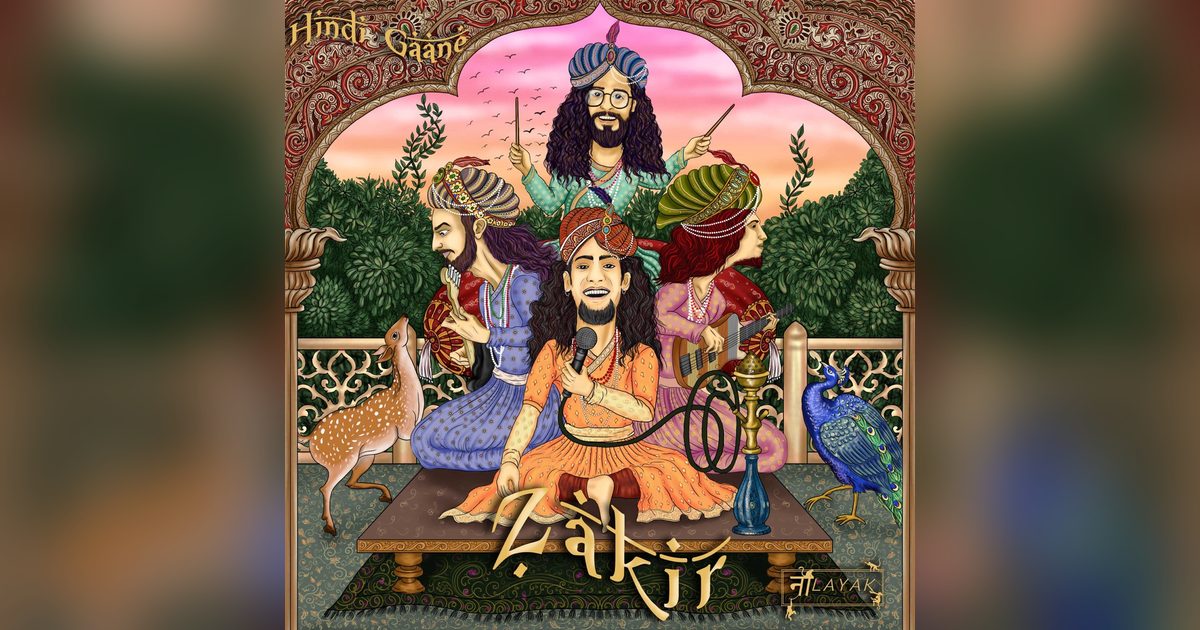
NAALAYAK is the case worth sitting with. "Zakir," at No. 3, and "Jeene Do" are ℗ Sahil Samuel. "Tabeer" and "It's Me" are ℗ Universal Music India. One act, both sides of the ledger, on the same playlist. The ℗ lines do not tell us the terms of either arrangement. They do tell us something more useful: NAALAYAK did not have to walk through one door and stay in that room forever. That, to us, is what a healthy independent career looks like in 2026: a major as a project partner, not a landlord for life.
The middle layer nobody maps
The most interesting number on Rock in India is the 32. Not majors, not bedroom uploads: the patchwork that actually holds Indian independent music together.
Merchant Records, the label owned by composers Salim and Sulaiman Merchant, holds five tracks: Agnee's "Mallaah" and "Le Chal Saaware," Pineapple Express's "Musafir," Antariksh's "Dastan-E-Dil (Shine Your Light)" and Parikrama's "Don't Cut Me Down." Songdew holds four, including Fiddlecraft's "Main Chala Jaunga" and Last Minute India's "Rehnuma." The three Fossils songs from Fossils 7 sit under Bangla Rock. Motherjane carry the same imprint, aum-i artistes, on 2008's "Mindstreet" and on "Home" from this year's Dobareh: eighteen years under one name, a quiet statement about staying in charge. Fallen Letters are on Alterfate Records, Girish And The Chronicles on Italy's Frontiers Records, The Down Troddence on Think Music, Joel Jossy's "Bagaawat" on Joel's Music Lab.
India never built one dominant indie label in the mould of Sub Pop or Warp. It built this instead: composer-run labels, band-run imprints, platforms that double as distributors, film-music companies taking a chance on a rock single. That is fragile, because no single house is big enough to carry a scene through a bad year. It is also free, because no single house gets to decide what Indian rock is.
Fresh Finds India: born owned
Fresh Finds India tells the newer story more starkly. Every one of its 50 tracks came out in 2026, between 5 February and 11 October, and 49 of them are singles. Thirty-five are in the artist's own name. Galat Admi and Sakré's No. 1, "Bhool Ja," is ℗ Galat Admi. Salt Rock's "Stay" belongs to Salt Rock; The DANGERMEN's "Bloom" belongs to The DANGERMEN.
The companies here are telling too. Sijya's "Do I Know" carries One Little Independent Records, the UK label long associated with Björk; The Hindu reported in September 2025 that she was the first Indian musician the label had signed. Calcutta Cowboy's "Stranger" is on First Floor Collective. These are labels chosen, not labels waited for.
Then there is the line we think matters most on either playlist. Rawmats' "Pahado Ki Sard Hawa" reads: ℗ 2026 Rawmats under exclusive license to Warner Music India. Over on Rock in India, Parvaaz's "Kauaʻi ʻōʻō" reads: ℗ 2025 Parvaaz Under Exclusive License to AWAL. Same grammar, same meaning. The artist holds the recording; the company rents the right to exploit it. Britain's competition regulator, clearing Sony's purchase of AWAL in March 2022, noted that artist-and-label services of AWAL's kind typically let artists retain full ownership of their copyrights. For two of the eleven major-linked slots on these playlists, the old ladder no longer ends with the masters signed away. It ends with a licence.
The placeholder problem
Not every line is so tidy. Four Rock in India tracks carry a label name in the form of a number followed by "Records DK": Parikrama's "I Believe," Kaali Pathram's "Fight You Want" and Claver Menezes's "RUSTLER" and "DIVIDE." DistroKid's own help page explains that this is the name its system assigns when no label is entered, and that it claims no ownership of the music. Five more tracks show no ℗ line on Spotify at all, among them Indian Ocean's "Bandeh" and Thermal And A Quarter's "Stone Circle."
Our view is simple. Metadata is how sync agents, festival programmers, royalty systems and, yes, journalists find out who to call. A band that owns its masters should say so on the page. Name the imprint, even if it is just the band's name with Records after it.
What the ledger tells Indian indie
First, the myth that Indian independent music is a waiting room for a label deal is finished. On these playlists, 53 of Rock in India's 100 tracks and 35 of Fresh Finds India's 50 point back to artists, directly or through DistroKid's no-label placeholder.
Second, ownership is the beginning, not the achievement. The 32 company-held tracks on Rock in India show where careers find leverage: a composer's label, a platform, an imprint that has stayed in the family. Owning the master is what lets a band choose that partner instead of being chosen.
Third, licence, do not assign. If a major or a major-owned service comes calling, the sentence to want on your release page is the one Rawmats and Parvaaz have: your name first, theirs after "under exclusive license to." If you are still building the team, start with our guide to releasing music without a record label.
FAQ
What is the ℗ line on Spotify?
It is the sound recording copyright line shown at the bottom of an album or single page. It names who claims ownership of the recording itself, the master.
Who owns most songs on the Rock in India playlist?
On our 15 October 2026 check, 49 of the 100 ℗ lines named the band, a credited artist or an individual, and four more carried DistroKid's automatic placeholder. Thirty-two named a company or imprint and ten led to a major label.
Are major labels on Fresh Finds India?
Barely. Only one of its 50 tracks on 15 October 2026 involved a major: Rawmats' "Pahado Ki Sard Hawa," whose ℗ line says it is under exclusive licence to Warner Music India.
What does "Records DK" mean on a Spotify release?
It is DistroKid's automatically generated label name for releases where no label was entered. DistroKid says it has no ownership of that music.
What does "under exclusive license" mean in a ℗ line?
It signals that the named artist owns the recording and has licensed it exclusively to the company that follows. Parvaaz and Rawmats are the two examples on these playlists.
Sources
- Spotify, Rock in India playlist 37i9dQZF1DX2Ja6eBQeGaS (100 tracks; checked 15 Oct 2026 IST; snapshot a41src/rii-a41-tracks.json): https://open.spotify.com/playlist/37i9dQZF1DX2Ja6eBQeGaS
- Spotify, Fresh Finds India playlist 37i9dQZF1DXaRf94BiB7fV (50 tracks; checked 15 Oct 2026 IST; snapshot a41src/ffi-a41-tracks.json): https://open.spotify.com/playlist/37i9dQZF1DXaRf94BiB7fV
- Spotify release pages for all 149 unique tracks: release dates and ℗ lines read 15 Oct 2026 IST (example: Lies, ℗ 2026 Thermal And A Quarter); full ledger in a41src/pline-a41.json: https://open.spotify.com/album/1MxFNlTRUIKzItzWA4QEDB
- DistroKid Help Center, Why Is My Record Label Name Listed as “123456 Records DK”?: https://support.distrokid.com/hc/en-us/articles/360013534554-Why-Is-My-Record-Label-Name-Listed-as-123456-Records-DK-Or-Some-Other-Number
- UK Competition and Markets Authority, CMA clears Sony’s acquisition of AWAL, 16 March 2022: https://www.gov.uk/government/news/cma-clears-sony-s-acquisition-of-awal
- Merchant Records, official site (label owned by Salim and Sulaiman Merchant): https://merchantrecords.in/
- Rolling Stone India, Salim-Sulaiman interview on Merchant Records: https://rollingstoneindia.com/salim-sulaiman-interview-merchant-records/
- The Hindu, Meet Sijya, the first Indian musician signed to the label that backed Björk, 5 September 2025: https://www.thehindu.com/life-and-style/meet-sijya-the-first-indian-musician-signed-to-the-label-that-backed-bj%C3%B6rk/article70007948.ece
- discography.in, Spotify’s Indian Indie Gatekeepers: https://discography.in/articles/spotify-indian-indie-gatekeepers
- discography.in, artist profiles and reviews cited: The Yellow Diary, Agnee, NAALAYAK, Fossils, Motherjane, Parvaaz, Salt Rock, The DANGERMEN, Calcutta Cowboy: https://discography.in/articles/the-yellow-diary-band
Cover: the site’s built-in Gate cover option for this topic essay (same desk choice used for Independence Rock Festival and Spotify’s Indian Indie Gatekeepers); no artist image uploaded.
Discography is an independent music magazineHow to get coveredRelease music in IndiaIndian indieIndian indie bandsAbout