The first words on Apple Music's lyric excerpt for Dil Ki Yaari are the oldest ones a Hindi love song can reach for: "Sun, o piya, tere bin laage na jiya." Listen, beloved; without you the heart will not settle. Arunima Wali sings them over almost nothing, and for the first half-minute that is the whole record: a trained Hindustani voice, a sparse bed of sound and the patience to let a cliché sound like a confession. At No. 10 on Fresh Finds India this week, Dil Ki Yaari is the oldest release in the playlist's top ten. It is also the clearest evidence on the list that a steady crew and a good voice can outlast the novelty cycle. Our reservation is with the words, not the singer.
Dil Ki Yaari at a glance
- Artist: Arunima Wali (solo-billed on Spotify, Apple Music and YouTube)
- Release reviewed: Dil Ki Yaari – Single, one track, 12 August 2026; ℗ 2026 Arunima Wali
- Length: 3:33
- Apple Music genre tag: Pop
- Apple Music credits: Arunima Wali — performer, composer; Saurabh Tripathi — lyrics; Sagar Dhote and Ehsaas Dhudhwala — producers; Ruthuraj — guitar; Zebba Tommy — background vocals; Rohit Singh Bhau — mixing and mastering engineer
- Background: New Delhi-born and Faridabad-raised, trained in Hindustani vocals, a financial consultant by profession (Rolling Stone India, 2021; Spotify artist bio)
- Spotify, checked 16 October 2026, about 1:30 AM IST: 20,875 monthly listeners, 2,435 followers; Dil Ki Yaari at 84,635 plays
- Fresh Finds India: No. 10 at our 1:28 AM IST snapshot on 16 October 2026 (spotify:track:4WzXpqKqQiyneF4KE0jEdF); not on Rock in India
The oldest song in the top ten
Fresh Finds India is a gate, as we argued in Spotify's Indian indie gatekeepers, and gates usually favour the newest arrival. Dil Ki Yaari came out on 12 August, 65 days before our snapshot. Every other song in the top ten was released between 20 August (Bhool Ja) and 11 October (Seedhi Saadhi); Khatt, one place above, is six weeks younger.
Our own playlist logs show how it got here. At every check from about 1 PM IST on 13 October to about 11 AM IST on 14 October, Dil Ki Yaari sat at No. 5. By our next check, at about 2 PM, five new songs had entered at the top, from Bhool Ja to Longer Way Back Home, and most of the list moved down by five places. Dil Ki Yaari did not fall. The playlist grew over it. The top ten has not changed order in any of our snapshots since. New music arrives on top; older music either holds its place or quietly leaves. Dil Ki Yaari has held.
That staying power fits the artist. Her debut, Can't Breathe, came out in January 2021; Rolling Stone India covered its black-and-white video that February and reported she recorded it at Faridabad's Noisy Gates Studios with the producer duo VAN Music. This is not a discovery. It is a five-year build that a playlist has caught up with.
Four singles, one crew
The Apple Music credits tell the real story. Between November 2025 and August 2026, Wali released four singles in under nine months: Rehna Tum (20 November 2025), Kyun (22 January 2026), Kya Jadoo (23 April 2026) and Dil Ki Yaari. Sagar Dhote produces all four. Rohit Singh Bhau mixes and masters all four. Ruthuraj plays guitar on all four. From Kyun onwards the line-up is fixed: Ehsaas Dhudhwala joins Dhote as co-producer and Saurabh Tripathi writes the lyrics. Background vocals by Zebba Tommy appear on Kyun and Dil Ki Yaari, though Apple spells both names slightly differently on Kyun.
None of them is billed on the tile. Unlike the producer-on-the-cover pattern we described in Indian indie collabs, this is a house team working behind one name, and the ties run deep. Dhote was co-billed with Wali and Vismay Patel on Dil Na Lageya in April 2024, still her most-played song on Spotify at 214,402 plays. Tripathi shares songwriting credits on Miley Ho Tum Mujhe (2022) and Koi Tumsa Nahi (2023).
For a songwriter whose own bio calls her a financial consultant by profession, a fixed team is the sensible way to work: a release every two to four months, made with people who know the voice. Fresh Finds India often rewards the breakout. Here it has rewarded the routine, and Indian independent music needs more artists who can keep one.
The voice is the instrument
Wali's Spotify bio says she started Hindustani vocal training very young, and you can hear it in the first phrase. "Piya" and "jiya" are the oldest rhyme in Hindi film song, and she does not try to make them modern. She leans into them, holds the vowel and lets the pitch settle, the way a classically trained singer approaches a word. It is the most persuasive thing on the record, and it is why the bass-less opening works rather than drags.
The hook arrives at about the one-minute mark. On our machine transcription of the official YouTube audio, which we offer as approximate, the chorus asks to make "dil ki yaari", friendship of the heart, and complains that the waiting has gone on long enough. Both store previews catch it: Apple Music's clip starts at about 0:45, Spotify's at about 0:54. Khatt, by contrast, keeps its title for the last third, beyond both previews. By design or instinct, this team writes for the preview window, and on Fresh Finds that is a real advantage.
Where the words fall short
Here is our reservation. Saurabh Tripathi's lyric is built almost entirely from stock vocabulary: piya, jiya, memories kept close to the heart, a prayer, loneliness, a plea to come back. Each line is sung well. Few say anything a listener has not heard a hundred times in Hindi film music. Wali told Rolling Stone India in 2021 that her debut was stitched together from her own experiences and her friends', and her Spotify bio speaks of "putting life into words of every song she writes." On this record the words are credited to someone else, and they could belong to anyone.
That is not fatal; plenty of great Hindi songs run on familiar words and a singular voice. But it leaves Dil Ki Yaari dependent on one asset. The next single needs a lyric as specific as her phrasing.
How it is built
The structure is clean and patient. The opening 35 seconds carry almost no low end; the bottom of the mix enters at about 0:36, and the first chorus lands around 1:00. At about 1:52 the arrangement strips back for the second verse, then rebuilds; the last chorus begins around 2:32, a closing refrain our transcription could not resolve cleanly arrives at about 3:02, and the music ends near 3:28. At 3:33 the song runs 18 seconds longer than the Fresh Finds India median of 3:15, the figure we tracked in Indian indie song length, and at least 45 seconds longer than any of her three previous singles.
On the YouTube audio we measured about −10.7 LUFS integrated with an 8.2 LU loudness range: a little louder than Khatt (−11.2) and with more contrast between its quiet and full sections. The Apple Music preview reads about −10.3 LUFS, close to Mohana. Chroma analysis points to F major and onset analysis to a pulse near 80 BPM (the detector also locks onto the double-time 160). These are desk measurements on lossy streaming audio, not the master.
The ownership line is simple: ℗ 2026 Arunima Wali on Apple Music, Spotify and YouTube, where the auto-generated upload names Virgin Music Group as the distributor that provided it. As we laid out in who owns Indian indie music masters, a ℗ line is a public claim, not a contract, but this one points to self-release, as on every solo single in her catalogue.
Verdict
Dil Ki Yaari is a modest song made with real care, and its place on Fresh Finds India is earned. Arunima Wali has spent five years building a catalogue around a classically trained voice, and over the past year she has found a stable team. The song puts its title where a playlist listener will hear it and lets the voice do the persuading. What it lacks is a lyric worthy of that voice; unlike Do Pal or Khatt, it leaves no single image behind. Still, in a top ten crowded with new arrivals, the song released first is the one that has held its place. That steadiness is the point, and it is worth more than a lucky week.
FAQ
Who sings Dil Ki Yaari?
Arunima Wali, the only billed artist. Apple Music credits her as performer and composer, with background vocals by Zebba Tommy.
Who wrote and produced Dil Ki Yaari?
Arunima Wali composed it and Saurabh Tripathi wrote the lyrics. Sagar Dhote and Ehsaas Dhudhwala produced it; Rohit Singh Bhau mixed and mastered it.
When was Dil Ki Yaari released?
12 August 2026, as a one-track single, 3:33 long, ℗ 2026 Arunima Wali.
Is Dil Ki Yaari on Fresh Finds India?
Yes. It was No. 10 at our 1:28 AM IST snapshot on 16 October 2026, after No. 5 in our checks on 13 and 14 October. It was not on Rock in India.
Sources
- Apple Music / iTunes Lookup, Dil Ki Yaari – Single by Arunima Wali (collectionId 6790821131, trackId 6790821133; release 12 Aug 2026; 213188 ms; genre Pop; ℗ 2026 Arunima Wali): https://music.apple.com/in/album/dil-ki-yaari-single/6790821131
- Apple Music song credits and lyric excerpt for Dil Ki Yaari: https://music.apple.com/in/song/dil-ki-yaari/6790821133
- Apple Music artist page and catalogue credits (Can't Breathe, Kaise Main Kahoon, Miley Ho Tum Mujhe, Koi Tumsa Nahi, Dil Na Lageya, Jee Le Zara, Rehna Tum, Kyun, Kya Jadoo): https://music.apple.com/in/artist/arunima-wali/1547924956
- Spotify track Dil Ki Yaari (release 12 Aug 2026; ℗ 2026 Arunima Wali): https://open.spotify.com/track/4WzXpqKqQiyneF4KE0jEdF
- Spotify artist page (bio, monthly listeners, followers, play counts, checked 16 Oct 2026 about 1:30 AM IST): https://open.spotify.com/artist/2XbJp0erWMnqGVUj3KqhKT
- Fresh Finds India playlist (No. 10 at 1:28 AM IST, 16 Oct 2026; No. 5 in desk snapshots on 13 and 14 Oct): https://open.spotify.com/playlist/37i9dQZF1DXaRf94BiB7fV
- Rock in India playlist (Dil Ki Yaari absent at the same check): https://open.spotify.com/playlist/37i9dQZF1DX2Ja6eBQeGaS
- YouTube, Dil Ki Yaari (auto-generated upload provided by Virgin Music Group; Composer Arunima Wali, Lyricist Saurabh Tripathi; released 2026-08-12): https://www.youtube.com/watch?v=A_dawBUsJ2M
- Rolling Stone India, David Britto, "See Arunima Wali's Moody Black and White Video for Debut Single 'Can't Breathe'" (24 Feb 2021): https://rollingstoneindia.com/see-arunima-walis-moody-black-and-white-video-for-debut-single-cant-breathe/
- Desk measurements: EBU R128 loudness, chroma key estimate, onset tempo, section loudness and preview alignment on the official YouTube audio and the Apple Music and Spotify previews; machine transcription of the YouTube audio (approximate, not an official lyric sheet)
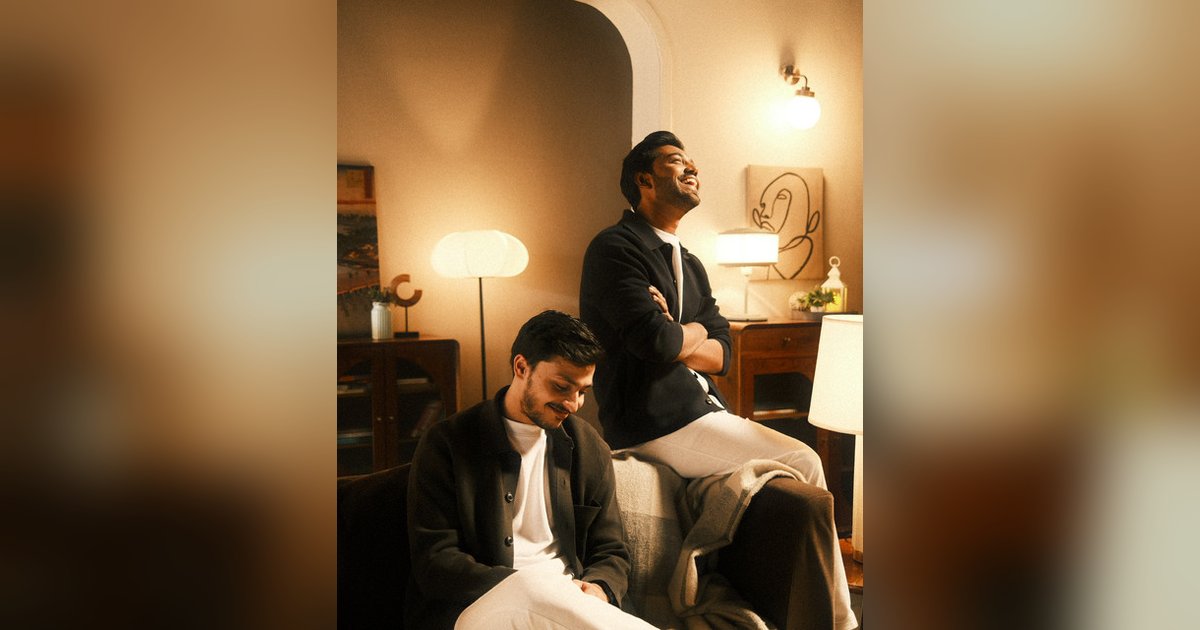
Cover: Dil Ki Yaari official single artwork (℗ 2026 Arunima Wali), via Apple Music. Shown in full, centred on a matching field taken from the artwork's own dark-foliage edges at 1200×630; metadata stripped. Source: https://music.apple.com/in/album/dil-ki-yaari-single/6790821131.
Discography is an independent music magazineHow to get coveredRelease music in IndiaIndian indieIndian indie bandsAbout