Key facts
- Seedhe Maut: Delhi duo Calm and Encore ABJ, formed 2015; debut album Bayaan released 28 December 2018
- Hanumankind: Sooraj Cherukat, born 1992 in Malappuram, Kerala; Big Dawgs with Kalmi released July 2024
- Early history: Baba Sehgal's 1992 album Thanda Thanda Pani sold 100,000 copies in three and a half months
- Scope: Ten Indian rappers, from Mumbai and Delhi to Kerala and Shillong
- Divine: Vivian Wilson Fernandes, born 1990; breakthrough Mere Gully Mein (2015) with Naezy; Punya Paap (2020)
A list of the best Indian rappers usually turns into a list of the most-streamed Mumbai and Delhi names. This one starts there because that is where the scene's records were made, then moves south to Kerala and east to Meghalaya, where some of the sharpest Indian hip-hop now comes from. We picked ten acts. Each entry sticks to what the public record shows: the release that broke them, the label or setup behind them, and where they come from. We have no streaming figures or chart claims beyond what the sources print.
One reservation first. Any list like this rewards the rappers who already have the most written about them. Rappers working in Bhojpuri, Odia, Marathi or Assamese, who have little English-language coverage, are underrepresented here. That is our gap, and it is a reason the list will be revised rather than a claim that those scenes are smaller.
Why Indian hip-hop matters now
Indian hip-hop is older than the Gully Boy era. Its documented history begins with breakdancing in the mid-1980s, spurred by films like Wild Style and Beat Street, and reaches the charts through Baba Sehgal, whose 1992 album Thanda Thanda Pani sold 100,000 copies in three and a half months. The term "desi hip-hop", now shortened by fans to DHH, is credited to Bohemia.
What changed in the last decade is distribution. Gully rap, the Mumbai street style built on socio-political lyrics in a Hindi-Urdu cadence, grew on cheap smartphones, cheap data and YouTube. Most of its artists are independent and promoted through word of mouth. If you have read our report on how Indian indie musicians earn from streaming (https://discography.in/articles/indian-indie-streaming-income-2026), you will recognise the pattern: the platforms opened the door, and the artists who kept their masters kept the upside.
Mumbai: the gully rap generation
Vivian Wilson Fernandes, born in 1990, is widely credited as one of the rappers who brought Indian hip-hop into the mainstream. His lyrics draw on growing up in the chawls of Mumbai. "Yeh Mera Bombay" (2013) got him noticed, and "Mere Gully Mein" (2015), with Naezy, was the breakthrough. His album Punya Paap (2020) reached the top spot on Apple Music India and put him on a Spotify billboard in Times Square, the first Indian rapper to appear there. In 2022 he became the first Indian hip-hop artist to attend the Grammys. His third album, Gunehgar, followed the same year.
Naezy
Naved Shaikh, born in 1993, is the other half of "Mere Gully Mein", and the Zoya Akhtar film Gully Boy (2019) drew on his life and Divine's. That is a mixed legacy. The film made gully rap a national talking point, but a fictional Ranveer Singh is now the best-known version of Naezy's story. His 2024 run to runner-up on Bigg Boss OTT Season 3 kept him famous without saying much about where his music goes next.
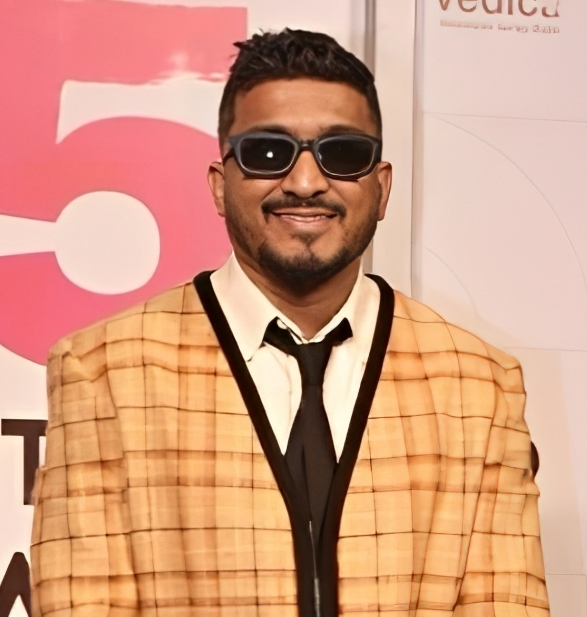
Bilal Shaikh, born in 1995, is the clearest case study in self-built reach. He is independent and grew his audience through social media, with "Machayenge" (2019) and "Firse Machayenge" (2020) as the videos that did it. He has worked with Macklemore and Snoop Dogg. He is also known for long feuds with Raftaar, Divine, MC Stan and KR$NA. Those beefs have brought him attention, though they are not the strongest part of his catalogue.
MC Stan
Altaf Tadavi, born in 1999 and styled MC ST∆N, comes out of the trap end of desi hip-hop. He won Bigg Boss 16 in 2023. Our reservation from the introduction applies twice over here: reality television did more for his name recognition than any record, and a list about rapping should say so plainly.
Delhi: lyricists and labels
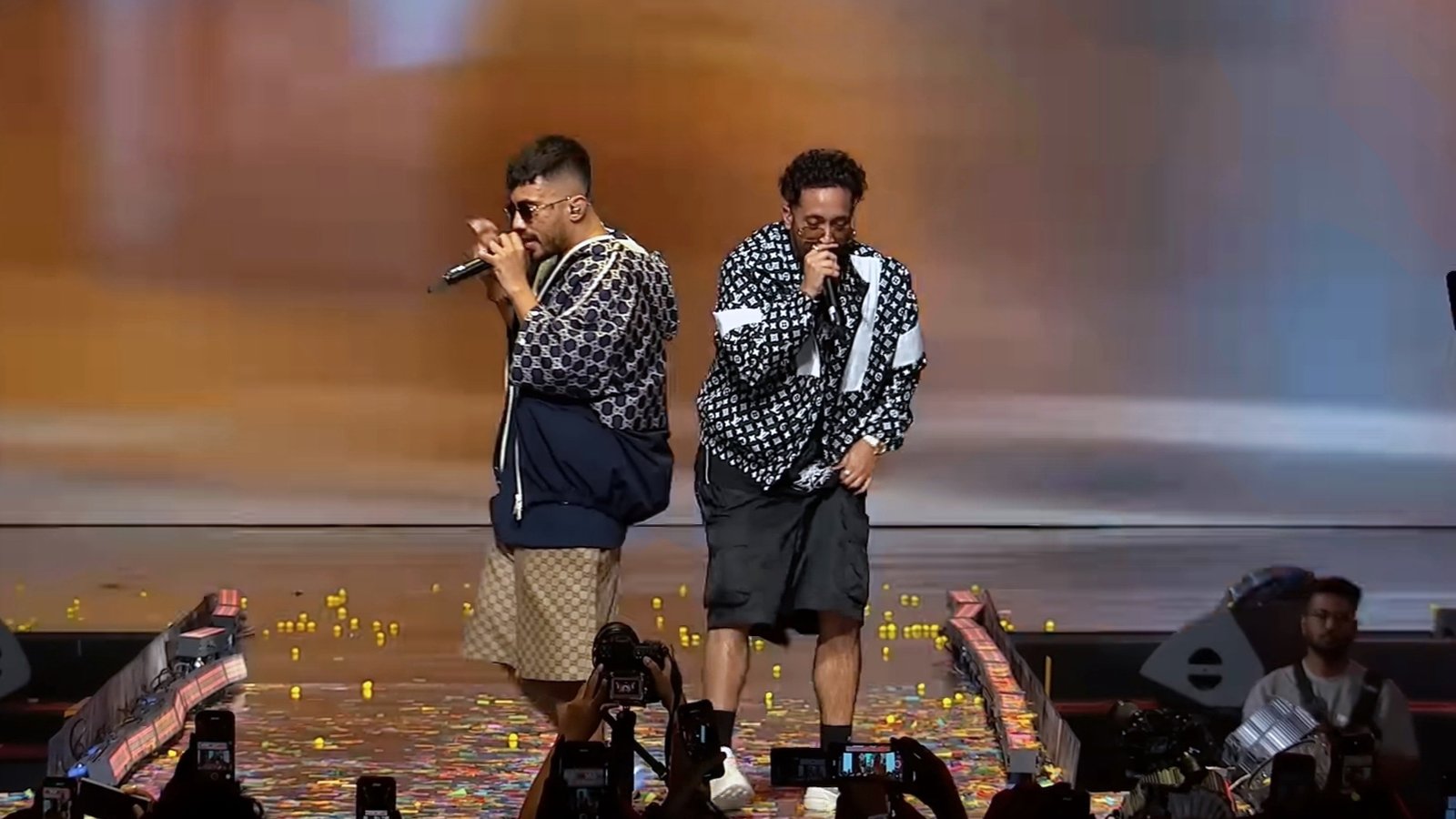
Calm (Siddhant Sharma, from Nainital) and Encore ABJ (Abhijay Negi, from Pauri Garhwal) formed the duo in 2015, after meeting at Spit Dope Inc., an underground battle league at Deer Park in Hauz Khas Village. They signed to Azadi Records in 2017. Their debut album Bayaan, produced by Sez on the Beat, came out on 28 December 2018. After Lunch Break (2023) they left Azadi and set up their own label, DL91, in 2024. That move matters as much as any verse: a duo that came up through battles now owns its own route to release, the same choice we looked at in our guide to releasing music without a record label (https://discography.in/articles/release-music-without-record-label).
Prabhdeep Singh, born in 1993 in Tilak Nagar, West Delhi, came to rap through b-boying and Delhi's open mics. Sez on the Beat signed him to Azadi Records, and his debut album Class-Sikh debuted at number 2 on the iTunes India albums chart and later reached number 1. He is the most writerly rapper on this list. His songs about his neighbourhood and his family history are worth more than any feature count.
KR$NA
Krishna Kaul was among the earliest rappers of the mid-2000s scene, first as Prozpekt. "Kaisa Mera Desh" (2010) is described as the first Indian hip-hop song on YouTube. After signing with Contrabands in 2013 he released Sellout (2014), an all-English album on Universal Music. Today he is better known for dense Hindi lyricism and a cameo as himself in Gully Boy. Two decades in, he is still the benchmark for technique in battles and diss tracks.
Raftaar
Dilin Nair, born in 1988, works across Hindi, Punjabi and Haryanvi music and doubles as a producer and TV personality. He is the most commercially visible rapper here. That is also our reservation about him: his crossover career means his best rap work is harder to find among the film and television credits.
South and Northeast: the new centres
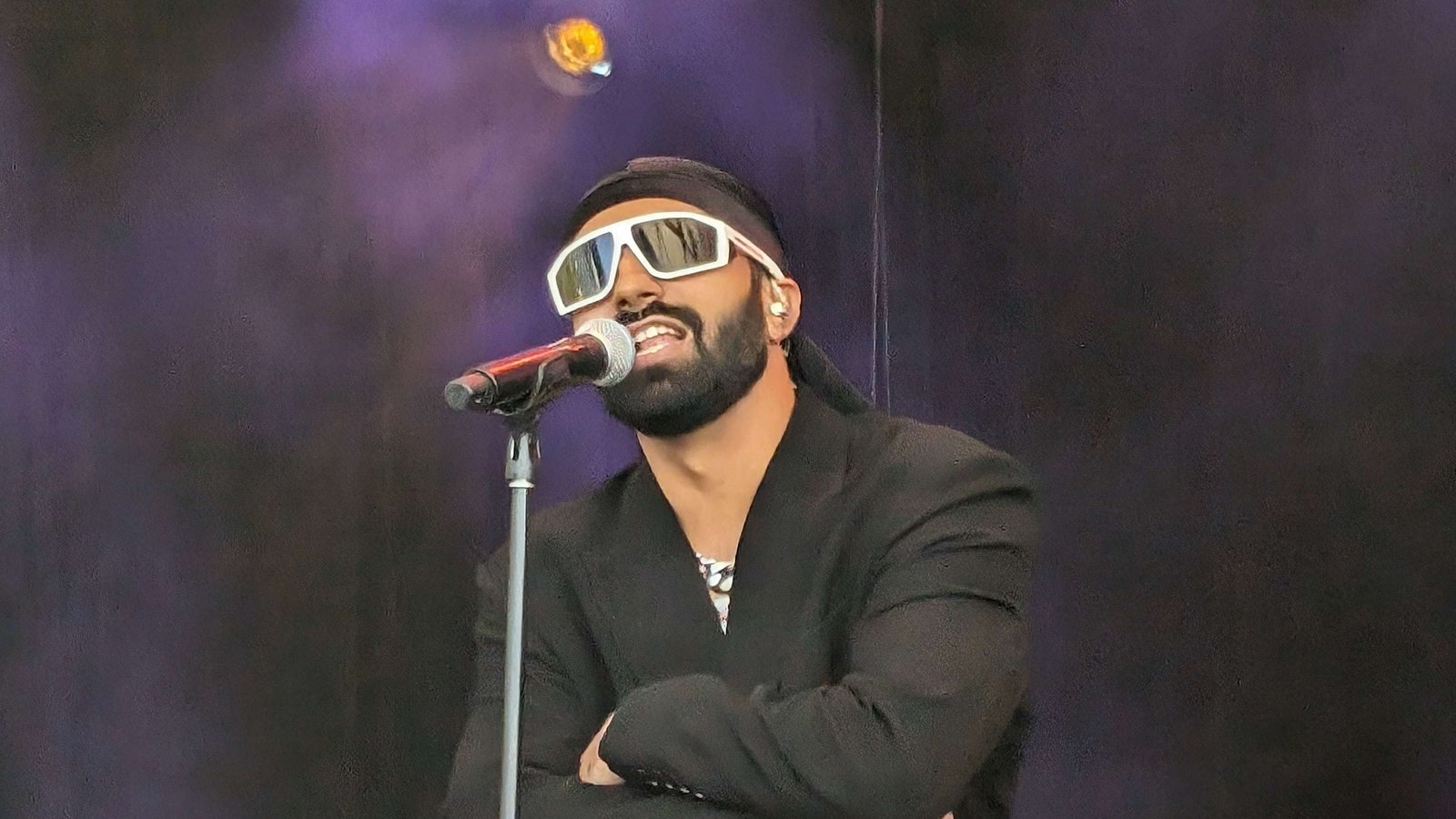
Sooraj Cherukat, born in 1992 in Malappuram, Kerala, grew up partly in Houston before returning to India. He began his professional career in 2019 with an NH7 Weekender set and the Kalari EP. Rolling Stone India put him on its first "Future of Music" list in March 2024, and "Big Dawgs" with producer Kalmi, released in July 2024, took him international. His song "The Last Dance" is on the Aavesham soundtrack. NH7 Weekender is on our festival calendar (https://discography.in/articles/music-festivals-india-2026-calendar), and his route through it shows how much festival stages still matter for building a rapper's career.
Two names point to where the next list will grow. Dabzee (Mohammed Fasil, born 1991) is a Kerala rapper whose film breakout was "Manavaalan Thug" from Thallumaala. In Meghalaya, Reble (Daiaphi Lamare) grew up between Khasi and Pnar cultures and blends hip-hop with trap, hardcore and R&B. She debuted with "Bad" in 2019 and released the Entropy EP in November 2022. Rolling Stone India included her "Talk of the Town" among the best Indian independent singles of 2022, and in 2025 she worked on the Lokah Chapter 1: Chandra soundtrack. Shillong's rock history is well known. Its rap scene now deserves the same attention.
What the list leaves out
Ten entries cannot cover a scene this large. Language is the clearest gap. Our piece on Indian indie languages ( https://discography.in/articles/indian-indie-languages ) shows Hindi growing its share of discovery, and this list leans Hindi too. Malayalam, Khasi and Punjabi rap each deserve their own guide, and those are on the calendar. For the wider picture beyond hip-hop, read our overview of the independent music scene in India in 2026 ( https://discography.in/articles/the-independent-music-scene-india-2026 ) and our list of the best Indian independent artists of 2026 (https://discography.in/articles/best-indian-independent-artists-2026).
FAQ
Who is the most influential Indian rapper?
Divine is widely credited as one of the pioneers who brought Indian hip-hop to the mainstream, and his collaboration with Naezy on "Mere Gully Mein" helped inspire the film Gully Boy. KR$NA has an earlier claim, since he was active from the mid-2000s.
What is gully rap?
Gully rap is a Mumbai-born style of hip-hop focused on street life and socio-political themes, delivered in a Hindi-Urdu cadence. "Gully" means narrow lane. Most of its artists are independent.
Which Indian rappers run their own labels?
Seedhe Maut founded DL91 in 2024 after leaving Azadi Records. Emiway Bantai built his audience as an independent artist through social media.
Are there rappers from Northeast India?
Yes. Reble, from Meghalaya, has released the Entropy EP and worked on film soundtracks.
Sources
https://en.wikipedia.org/wiki/Indian_hip-hop https://en.wikipedia.org/wiki/Gully_rap https://en.wikipedia.org/wiki/Divine_(rapper) https://en.wikipedia.org/wiki/Naezy https://en.wikipedia.org/wiki/Gully_Boy https://en.wikipedia.org/wiki/Emiway_Bantai https://en.wikipedia.org/wiki/MC_Stan https://en.wikipedia.org/wiki/Seedhe_Maut https://en.wikipedia.org/wiki/Prabh_Deep https://en.wikipedia.org/wiki/Krsna_(rapper) https://en.wikipedia.org/wiki/Raftaar_(rapper) https://en.wikipedia.org/wiki/Hanumankind https://en.wikipedia.org/wiki/Dabzee https://en.wikipedia.org/wiki/Reble https://commons.wikimedia.org/wiki/File:Oasis_24_Seedhe_Maut.png
Related on Discography
https://discography.in/articles/best-indian-independent-artists-2026 https://discography.in/articles/the-independent-music-scene-india-2026 https://discography.in/articles/music-festivals-india-2026-calendar https://discography.in/articles/indian-indie-languages https://discography.in/articles/release-music-without-record-label https://discography.in/articles/indian-indie-streaming-income-2026
Cover photo: Pranav100104 / Wikimedia Commons (CC0).
Discography is an independent music magazineHow to get coveredRelease music in IndiaIndian indieIndian indie bandsAbout