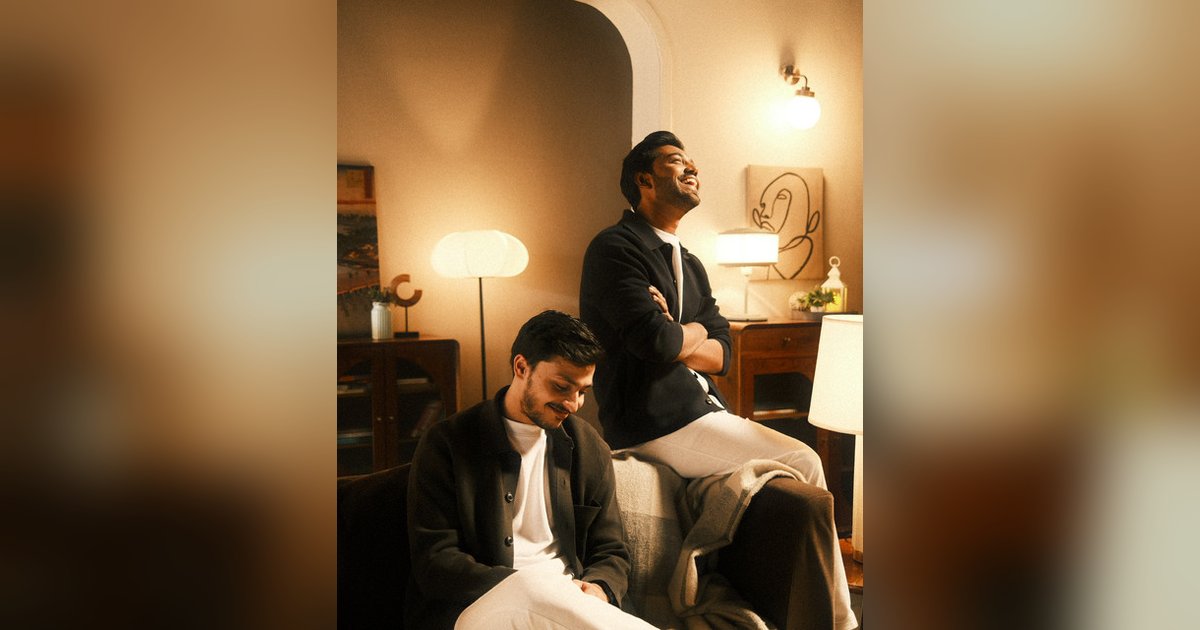
Saahel released Halki Halki on 28 August 2026, a three-minute love song he wrote, composed and produced himself, and seven weeks on it is still sitting on both of Spotify's big Indian independent playlists. When we took a snapshot at 8:32 PM IST on 16 October, the Mumbai singer-songwriter's single was No. 8 on Indie India and No. 28 on RADAR India, where two older Saahel songs, Zulfe with Trosk at No. 14 and Tera Pata at No. 34, were also in the list of 75.
That's a lot of room on two lists for an artist many listeners still know by a single name. He spells it Saahel on the streaming services and Saahell in his YouTube handle and his Instagram name, saahellmusic; a 2022 CineTalkers profile gives his full name as Saahel Nitin Magar. This is a review of the new song, and the short version is that it is better than its quiet first impression, and safer than it needed to be.
Saahel at a glance
- Artist: Saahel, Mumbai singer-songwriter and producer (Rolling Stone India, July 2023); @saahellmusic on Instagram, @Saahell on YouTube
- Single: Halki Halki, 2:58, released 28 August 2026; ℗ and © 2026 Saahel on Spotify, ℗ 2026 Saahel on Apple Music
- Credits (Apple Music and the video's YouTube description): Saahel on vocals, composition, lyrics, production and vocal recording; Shujauddin Syed on guitars; Ashish Raitani on mixing and mastering
- Video: Halki Halki (Official Music Video) on his own YouTube channel, published 19 September 2026
- Playlists at our 8:32 PM IST capture on 16 October 2026: Indie India No. 8; RADAR India No. 28, with Zulfe at No. 14 and Tera Pata at No. 34
A song about not noticing
Saahel has explained this one more plainly than most release notes manage. In a story carried by Tellychakkar on 10 September, he is quoted as saying, "Sometimes you don't fall out of love, you just get caught up in life." He goes on: "I wanted to write about the little things we stop noticing, and what it feels like to want them back."
In the description he wrote under the video, he puts it another way. The song came from the feeling of love getting lost "somewhere between work, noise, responsibilities, the city, and just ... life", and he says he kept thinking of it "as a breeze in the middle of the city."
So there's no breakup here, and nobody to blame. Two people still love each other and have stopped looking up. That's a harder thing to write a pop song about than heartbreak, because nothing actually happens in it, and I respect him for choosing it.
How it sounds
The hook is the title. "Halki halki bekarari", roughly a light, creeping restlessness, opens the 30-second stretch Apple Music uses as the song's preview and comes back around barely twenty seconds later. The lines in between keep landing on the same long "aari" sound, so the chorus rhymes its way forward instead of building. It's the part of the song that stays with you.
What it doesn't give you is a lift. Through that chorus window the track holds at more or less one level from start to finish; there's no drop and no sudden surge to tell you this is the important part. At first that can read as underpowered. Give it a few plays and it starts to feel like the point. A song about two people drifting at a constant, polite distance probably shouldn't explode in its chorus.
The credits are short. Shujauddin Syed is the only other player listed, on guitars, and everything else around the voice is Saahel's own production. Ashish Raitani mixed and mastered it, as he did Baarish Mein Phir in 2025, according to that song's video credits. You can hear the family resemblance. Both songs are about love at a distance, both stop just short of three minutes, and both are written, composed and produced by Saahel alone. Our earlier piece on Indian indie song length looked at how long songs on these playlists tend to run; at 2:58, Halki Halki sits in the short, pop-sized pocket rather than the long rock one.
The video and the artwork
The video is shot and graded by Krish Wadhwa and edited by Pushkar Shandilya, per its description. Its thumbnail shows Saahel in headphones singing into a corded microphone, surrounded by racks of old vinyl records, in a dark pinstriped jacket with a star patch on it. The illustrated single artwork draws him in what looks like the same jacket, eyes closed, floating over a city at dusk with a crescent moon and a curving flyover below him. It's a neat bit of continuity, and it matches his "breeze in the middle of the city" line better than the song's sound alone does.
The video had 145,128 views when we checked on 16 October, against more than 17.2 million for the Baarish Mein Phir video, which has had thirteen months longer to travel. On Spotify at about 8:35 PM IST, Halki Halki showed 682,479 plays, next to 20,096,118 for Baarish Mein Phir and 11,016,485 for Zulfe. His artist page listed 2,264,344 monthly listeners.
From covers to Tera Pata
Saahel didn't start as a songwriter. He told Rolling Stone India's David Britto in July 2023 that his parents pushed him into Hindustani classical music as a child: "they forced me into it and I didn't like it at the first go." He came round to it, and credits that training as "a very major part" of what he makes. His following, he said in the same interview, began with "putting out covers and making my renditions of other songs"; CineTalkers in 2022 named his Hindi versions of Heartbreak Anniversary and Stay among the reels that spread.
His first original single on Apple Music is Zariya, dated 9 June 2022. He described his writing to Rolling Stone India this way: "Usually, I just get on my piano or my keyboard and just jot out some chord progressions and start thinking about some melodies. But sometimes I pick a raag and I put some chord progression on it." He also said he sometimes writes over type beats, which is a candid admission for a singer this melodic.
Tera Pata, released on 10 March 2025, is the song that pushed him onto a larger stage. His Spotify biography says that after it he "was featured on Spotify's Times Square billboard as part of the RADAR India program", and Indulge Express reported the same billboard in August 2025, describing him then as a 22-year-old. Baarish Mein Phir followed on 1 August 2025. "I wanted to write a song for people who aren't together anymore or live in different cities," he told News18 in August 2025. For more on how Spotify's editorial programmes can shape an Indian indie career, see our piece on Spotify's Indian indie gatekeepers.
The paperwork
The rights lines on Saahel's catalogue are unusually consistent. On Apple Music, his own singles from Zariya in 2022 through Halki Halki carry ℗ Saahel, year after year. There are two clear exceptions in 2026. Zulfe, his March single with Trosk, is ℗ 2026 Warner Music India, and its video credits Trosk as music producer. Jhoomo (From "Don't Be Shy"), a 3 September 2026 soundtrack single with Ram Sampath, Jonita Gandhi and Devansh Vaidya, is ℗ 2026 Super Cassettes Industries Private Limited.
Halki Halki is back under his own name. The Japanese store OTOTOY lists its label as "Universal Music India Pvt. Ltd. (on behalf of Saahel)", and the streaming link in the Baarish Mein Phir video description is a UMGI.lnk.to address. We aren't inferring any contract terms from those lines, only reporting them. The Halki Halki video credits also name "Team Represent", and Represent Entertainment lists Saahel on its management roster. Whatever the exact arrangement, keeping the ℗ line on your own singles is what a lot of independent artists are trying to protect, and our guide to releasing music without a record label covers the basics.
What this publication thinks
Halki Halki is a good song that knows exactly how far it wants to go. The hook is real and the subject is braver than it looks. Not blowing up the chorus suits a lyric about two people who have gone quiet with each other. I'd play it for someone who loved Baarish Mein Phir without a second thought.
That's also my reservation. On our snapshot RADAR India had two different songs called Naina in it, and soft Hindi love songs are, to my ear, the dominant mood of both playlists right now. Saahel's version of that sound is warmer and better written than most of it, and his classical training shows in how cleanly the melody moves. But he told Rolling Stone India three years ago that he sometimes picks a raag before he picks a chord. I'd love to hear a single where that raag is allowed to take over the room. Here it sits very politely inside the arrangement.
Its nearest relative on Indie India may be Anubha Bajaj's Lamhey, No. 24 at our capture, another short song that makes a small feeling feel large. Saahel isn't far off. What he hasn't yet released is the song where something in the arrangement is allowed to surprise him.
FAQ
Who is Saahel?
Saahel is a Mumbai singer-songwriter and producer, sometimes styled Saahell after his YouTube and Instagram handles. He trained in Hindustani classical music as a child, built an audience with Hindi cover versions on Instagram, and has released his own singles since Zariya in 2022, including Tera Pata, Baarish Mein Phir and Halki Halki.
When was Halki Halki released?
Halki Halki – Single came out on 28 August 2026 on Spotify and Apple Music. It runs 2:58 and carries ℗ 2026 Saahel. The official music video followed on his YouTube channel on 19 September 2026.
Who produced Halki Halki?
Apple Music and the video description credit Saahel with vocals, composition, lyrics, production and vocal recording. Shujauddin Syed (listed by Apple Music as Syed Shujauddin) plays guitars, and Ashish Raitani mixed and mastered the track.
Is Halki Halki on Spotify's RADAR India playlist?
Yes. At our 8:32 PM IST capture on 16 October 2026, Halki Halki was No. 28 on RADAR India and No. 8 on Indie India. Zulfe (with Trosk) was No. 14 and Tera Pata No. 34 on RADAR India. Positions change often.
What is Saahel's real name?
A 2022 CineTalkers profile gives his full name as Saahel Nitin Magar. He releases music as Saahel.
Sources
- Spotify, RADAR India playlist (Zulfe No. 14, Halki Halki No. 28, TERA PATA No. 34; snapshot 8:32 PM IST, 16 October 2026): https://open.spotify.com/playlist/37i9dQZF1DWTAtTdFMiJYK
- Spotify, Indie India playlist (Halki Halki No. 8; snapshot 8:32 PM IST, 16 October 2026): https://open.spotify.com/playlist/37i9dQZF1DX5q67ZpWyRrZ
- Spotify, Halki Halki by Saahel (28 August 2026, 2:58; ℗/© 2026 Saahel): https://open.spotify.com/track/20FVN0wtdqkyhGSIJjr4qz
- Spotify, Saahel artist page (biography, monthly listeners and play counts at ~8:35 PM IST, 16 October 2026): https://open.spotify.com/artist/7st82DZof2QDfmIZPTgr7r
- Apple Music, Halki Halki song page and credits: https://music.apple.com/in/song/halki-halki/6802963561
- Apple Music, Halki Halki – Single (28 August 2026; ℗ 2026 Saahel): https://music.apple.com/in/album/halki-halki-single/6802963559
- Apple Music, Saahel artist page and catalogue: https://music.apple.com/in/artist/saahel/1627087447
- Apple Music, Zulfe – Single (19 March 2026; ℗ 2026 Warner Music India): https://music.apple.com/in/album/zulfe-single/1884230988
- Apple Music, Jhoomo (From "Don't Be Shy") – Single (3 September 2026; ℗ 2026 Super Cassettes Industries Private Limited): https://music.apple.com/in/album/jhoomo-from-dont-be-shy-single/6808096895
- YouTube (Saahel), Halki Halki (Official Music Video), with audio and video credits, 19 September 2026: https://www.youtube.com/watch?v=kNa0EVAoD2I
- YouTube (Saahel), Baarish Mein Phir (Official Music Video), with credits, 12 August 2025: https://www.youtube.com/watch?v=BOT2xL1-p6Q
- YouTube, Zulfe (Official Music Video), Saahel and Trosk, with credits: https://www.youtube.com/watch?v=iBkBCKkqpeM
- OTOTOY, Halki Halki by Saahel (label listing): https://ototoy.jp/_/default/p/4117012
- Rolling Stone India, David Britto, Saahel: 'I Make Music That Makes Me Happy', 18 July 2023: https://rollingstoneindia.com/saahel-interview/
- Tellychakkar, Saahel Returns With New Romantic Single 'Halki Halki', 10 September 2026: https://www.tellychakkar.com/movie/movie-news/saahel-returns-new-romantic-single-halki-halki-260910
- News18, Yatamanyu Narain, Saahel's New Single 'Baarish Mein Phir' Blends Indian Classical With R&B Vibes, 7 August 2025: https://www.news18.com/movies/bollywood/saahels-new-single-baarish-mein-phir-blends-indian-classical-with-rb-vibes-watch-ws-kl-9491531.html
- Indulge Express, Saahel brings his new single Baarish Mein Phir, 15 August 2025: https://www.indulgexpress.com/culture/music/2025/Aug/15/saahel-brings-his-new-single-baarish-mein-phir
- CineTalkers, Saahel – Saahell Music: The Face of Tomorrow's Music Industry, 6 September 2022: https://www.cinetalkers.com/saahel-saahell-music-the-face-of-tomorrows-music-industry/
- Represent Entertainment, Saahel roster page: https://representmgmt.in/saahel/
- Instagram, @saahellmusic: https://www.instagram.com/saahellmusic/
Cover: Saahel in headphones singing into a microphone among racks of vinyl records, from the thumbnail of the official Halki Halki music video on his YouTube channel (video shot and graded by Krish Wadhwa); cropped to 1200×630 by discography.in. Source: https://www.youtube.com/watch?v=kNa0EVAoD2I.
Discography is an independent music magazineHow to get coveredRelease music in IndiaIndian indieIndian indie bandsAbout