Key facts
- The Shillong Chamber Choir was founded in 2001.
- The Shillong Chamber Choir won the second season of India's Got Talent in October 2010.
- Meghalaya was created on 21 January 1972.
- Lou Majaw organised his first Bob Dylan tribute concert in Shillong in 1972.
- The 2011 census counted 143,229 people in Shillong.
Shillong carries a nickname that every Indian music fan has heard: the "rock capital of India." Meghalaya's government still uses the label when it talks about promoting music in the state. Writers who have spent time in the hill town argue about whether it still fits. This guide sets out what the record actually shows about the Shillong music scene: who built it, which institutions keep it alive, where the debate stands, and how to listen if you are visiting or just curious.
Shillong is not a big city. The 2011 census counted 143,229 people, which put it at 330th among Indian cities by population. Its influence on independent music in India is far larger than that number suggests, and the reasons are worth knowing.
Why Shillong matters to Indian independent music
Most Indian music hubs grew around an industry: film studios in Mumbai and Chennai, broadcasters and labels in Delhi. Shillong grew around people. For decades the scene has run on households, churches, schools, small cafés and a few musicians who stayed at home instead of moving to the metros. Its best-known voices sing mostly in English, play guitar-led rock, blues and folk, and treat Bob Dylan's birthday as a civic holiday.
The town also has an unusual history as a capital. The British made it the civil station of the Khasi and Jaintia Hills in 1864. It became the headquarters of the new Assam province in 1874 and stayed capital of undivided Assam until Meghalaya was created on 21 January 1972. Shillong then became Meghalaya's capital. That long stretch as an administrative centre brought schools, missions and outside visitors to the hills. All of them fed into the town's musical culture.
The "rock capital" debate
It is worth being honest about the nickname, because the people closest to the scene have been.
A Hindustan Times feature asked outright whether Shillong is really the rock capital of India. It concluded that the town has a rich rock history from the 1970s and 1980s, with bands like The Great Society starting things off in the 70s. In its view the scene had not sustained that energy, and it suggested a different label: "the heritage rock capital of India." In the same piece Lou Majaw, the scene's best-known elder, said that many people at Shillong gigs come from outside the town.
A Mint travel essay landed on a warmer conclusion. It noted that Shillong is "often referred to as the 'Rock capital of India', which most say it isn't." It then argued that music was "a way of life there" and that the town did not need gigs in every café to make its claim. A feature on SoundPlunge quoted Shillong musician and government official Carl Marbaniang, who said music in Shillong is "seasonal," that most opportunities come in winter, and that the shortage of shows and performance spaces makes it hard for bands to last.
That tension is the most useful thing to understand about the scene. The talent and the affection for music are real. The infrastructure (venues, steady pay, a local industry) is thin. Independent musicians from Shillong often build careers by touring and recording outside the state.
The people who built the scene
Lou Majaw
No account of music in Shillong starts anywhere else. According to Wikipedia, Lou Majaw was born in 1947 into a poor family and could not afford instruments as a child. He heard Bill Haley and Elvis Presley at a friend's house and taught himself guitar at school. He later moved to Kolkata, where he sang in bars and pubs with groups including the Dynamite Boys, Vanguards, Supersound Factory and Blood and Thunder.
In 1972 Majaw organised his first Bob Dylan tribute concert in Shillong. Mint and NPR both report that it is held on Dylan's birthday, 24 May, and that he has kept the tradition going every year since. NPR's 2009 report described Majaw performing on a stage put up on a local basketball court, with several hundred people standing in the rain to hear him. SoundPlunge reported that in 2013 he staged a "Sunrise to Sunset" concert at Umiam Lake near Shillong.
His recognition has grown with time. Majaw received the Bhupen Hazarika Award from the Governor of Assam on 24 October 2016. A documentary about his life, The Platinum Gong, directed by Sattyakee D'com Bhuyan, came out in 2023. In 2024 the University of Science and Technology, Meghalaya gave him an honorary Doctor of Letters.
Soulmate: Rudy Wallang and Tipriti Kharbangar
If Majaw is the scene's storyteller, Soulmate was its proof of craft. Wikipedia describes the blues rock band as built mainly around Rudy Wallang (guitar, vocals and songwriting) and Tipriti "Tips" Kharbangar (vocals and guitar), with session players joining on drums, bass and organ for tours. The same entry describes Kharbangar as considered one of the finest female singers to have emerged from North East India, and Wallang as considered one of India's most respected blues guitarists.
For a young musician, Soulmate's story shows that a band from a small hill town can be heard across the country without leaving the genre it loves.
The Great Society
Hindustan Times names The Great Society as one of the bands that "kicked off proceedings" in Shillong's rock scene in the 1970s. The name is still around today: Wikipedia lists The Great Society among the headliners of the Shillong Cherry Blossom Festival, next to international acts.
The choir tradition
Rock is only half the story. The other half is singing.
Shillong Chamber Choir
The Shillong Chamber Choir was founded in 2001. Wikipedia records that it won the second season of India's Got Talent in October 2010 on Colors TV, performing Western choral pieces and choral-style versions of Hindi film classics. Earlier that same year, in July 2010, it took part in the 6th World Choir Games in Shaoxing, China, and won gold diplomas in all three of its categories: Musica Sacra, Gospel and Popular.
The choir has 11 singers and sometimes performs with a 30-piece orchestra. Its founder and conductor, Neil Nongkynrih, is the subject of this page's cover photo.
For independent music, the choir's significance goes beyond TV fame. It showed national audiences that a group from Meghalaya could take Indian popular songs into a classical choral setting and make them its own. That spirit of crossing genres runs through the rest of the scene too.
Festivals and live music in Shillong
Bob Dylan's birthday, 24 May
Majaw's yearly tribute is the closest thing Shillong has to a signature gig. Its format has changed over the years, from basketball courts to cafés to the lakeside, but the date has stayed the same since 1972, according to Mint.
Shillong Cherry Blossom Festival
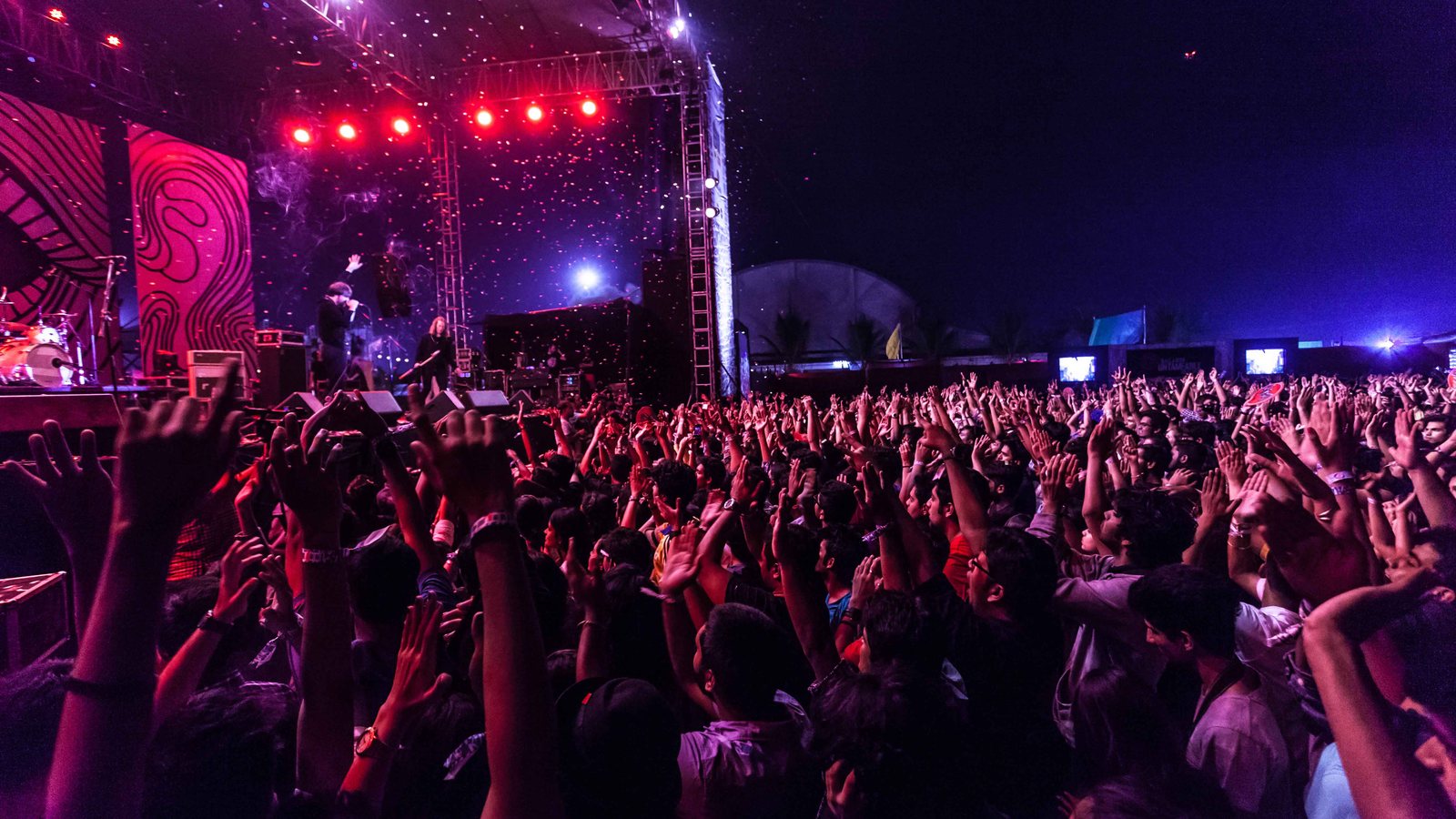
Wikipedia describes the Shillong Cherry Blossom Festival as an annual cultural event held mainly in November, timed to the blooming of the cherry trees. Its headliners have included Akon, R3HAB, Jasleen Royal, Kanika Kapoor, Boney M, Jonas Blue, Ne-Yo and The Great Society. It is a big-ticket event rather than an indie showcase, but it is one of the few times each year when large stages go up in the city.
The seasonal calendar
Carl Marbaniang's point to SoundPlunge is a useful planning tip: in Shillong, most of the music happens in winter. If you are travelling to see bands, plan for the cooler months and keep a close eye on local listings and artists' social pages, because shows are not held every week.
How to explore the Shillong scene
You don't need a ticket to start. Here is a practical way in:
- Start with the elders. Listen to Soulmate's catalogue and look for recordings of Lou Majaw's Dylan tributes. Together they give you the scene's core: blues, folk-rock and songwriting in English.
- Hear the choir. Shillong Chamber Choir's choral arrangements show the other side of the town's musical schooling.
- Follow the festivals. If you can only make one trip, aim for 24 May for history or November for the Cherry Blossom Festival.
- Look past Shillong. Many artists from Meghalaya play more often in Guwahati, Kolkata, Bengaluru and at festivals across the Northeast than at home. Following them on tour is part of following the scene.
- Support directly. In a scene with few venues, buying music and merch straight from the artist matters more than it does in a big metro.
What independent musicians can learn from Shillong
Shillong's history holds lessons for anyone building a career outside the big industry cities:
- Community beats infrastructure. The Dylan tribute has lasted more than 50 years with very little formal backing. A recurring event that the community owns can outlast any venue.
- Genre loyalty can travel. Soulmate stayed with the blues and still found national respect.
- Formal training shows up on stage. The choir tradition points to the value of musical education in schools and churches.
- Be honest about the gaps. The "rock capital" debate is useful. Naming the shortage of venues and steady work is the first step to fixing it.
FAQ
Why is Shillong called the rock capital of India?
The name comes from the town's strong rock and blues history, especially in the 1970s and 1980s, with bands like The Great Society, and from figures such as Lou Majaw. The Meghalaya government still uses it. Writers in Hindustan Times and Mint have questioned whether it fits the scene today.
What happens in Shillong on 24 May?
Lou Majaw has held a concert for Bob Dylan's birthday in Shillong on 24 May every year since 1972, with local musicians playing Dylan's songs.
Who are the best-known musicians from Shillong?
Lou Majaw, the blues band Soulmate (Rudy Wallang and Tipriti Kharbangar), The Great Society and the Shillong Chamber Choir, led by Neil Nongkynrih, are among the best-documented names.
When is the best time to catch live music in Shillong?
Local musicians say most gigs happen in winter. The Shillong Cherry Blossom Festival is mainly held in November, and the Dylan tribute is held every 24 May.
Related on Discography
- The Independent Music Scene in India, 2026
- Regional Rock Bands of India
- Music Festivals in India 2026-27
- Indian Indie Languages
Sources
- Wikipedia: Shillong
- Wikipedia: Lou Majaw
- Wikipedia: Soulmate (band)
- Wikipedia: Shillong Chamber Choir
- Wikipedia: Shillong Cherry Blossom Festival
- Hindustan Times: Is Shillong really the 'rock capital' of India?
- Mint: Meeting Dylan in Shillong
- NPR: In India, A Fan's Annual Tribute To Bob Dylan
- SoundPlunge: Music in Shillong: At the Brink of Change?
- South Asia Views: Lou Majaw conferred Lifetime Achievement Award
Cover photo: Dipankar Sinha / Wikimedia Commons (CC BY-SA 4.0).
Discography is an independent music magazineHow to get coveredRelease music in IndiaIndian indieIndian indie bandsAbout