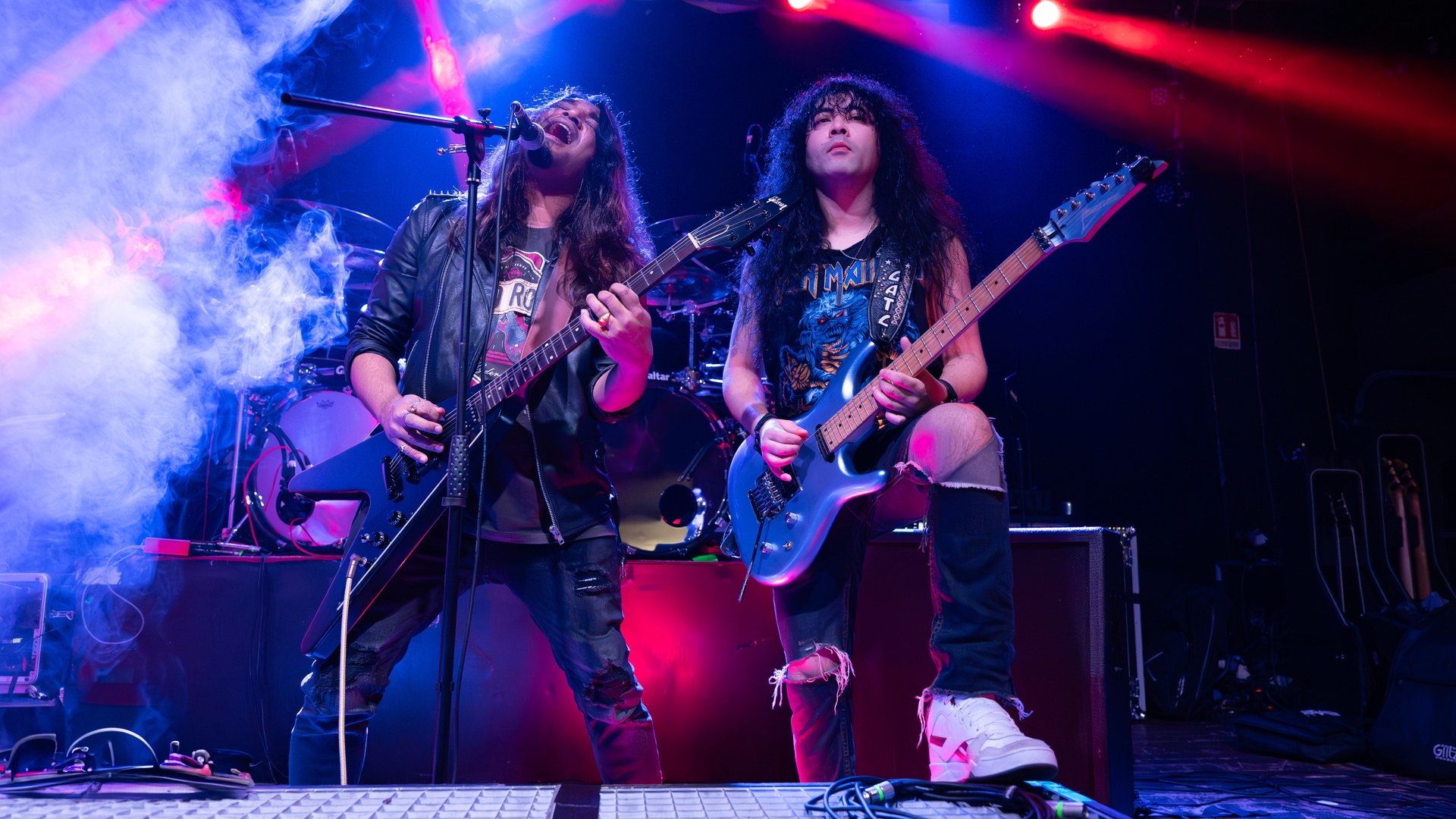
There's no official genre called "ghazal rock". But there is a clear thread in Indian independent music: bands and singers who take Urdu ghazals, Sufi poems, Kashmiri verse and the poetry of saints like Kabir and Bulleh Shah, and set them to guitars, drums and electronics instead of harmonium and tabla. This page is a guide to that thread, and only to Indian artists. Pakistan has its own long history here, from Junoon onwards, but that is a different story.
Every album and EP below is on Apple Music India, and every date and track count comes from Apple, checked on 28 October 2026. We don't print lyrics; where we explain a word, we keep it to a short line.
What we mean by ghazal and Sufi rock
- The ghazal is a poetic form, usually in Urdu, built from couplets that each stand alone, often about love, longing and loss. In film and classical music it is sung slowly over harmonium. In indie music, the form survives in the writing even when the sound changes.
- Sufi poetry is the devotional poetry of Islamic mysticism, in Punjabi, Urdu, Persian, Kashmiri and other languages, often about losing the self in the divine.
- Bhakti and saint poetry, like Kabir's, sits next to Sufi poetry in spirit and turns up in the same kind of rock arrangements.
What ties the artists below together is the words, not a single sound. Some are heavy, some are acoustic, some are folk-rock.
The bands
Parvaaz (Bengaluru, Kashmiri roots)
Formed in college by Kashmiri singer Khalid Ahamed and guitarist Kashif Iqbal, Parvaaz sing in Urdu and Kashmiri over psychedelic, slow-building rock. They are the band most people mean when they search for "ghazal rock" in India, even though they don't call themselves that.
- *Baran* (14 August 2014, 8 tracks). The debut. It won the Toto Funds the Arts award for music in 2015. Start with "Beparwah".
- *Kun* (17 October 2019, 9 tracks). Darker and more expansive.
- *Na Gul Na Gulistan* (5 December 2025, 8 tracks). The title means "neither the flower nor the garden". It's their first album with guitarist Bharath Kashyap.
More: Parvaaz; Parvaaz band history; Na Gul Na Gulistan review.
Alif (Kashmir and Mumbai)
Fronted by Srinagar-born singer and poet Mohammad Muneem Nazir, Alif set Kashmiri folk and poetry, along with Urdu and Hindi verse, to rock, alternative and electronic sounds. The name is the first letter of the Urdu alphabet.
- *Sufayed (2017, 13 tracks on the original Apple edition). Their debut album. Sufayed* means "white".
- *Siyah EPs: Haal (May 2021, 4 tracks) and Maazi (September 2021, 5 tracks). Siyah means "black", the counterpart to Sufayed*.
- *Ab Mujhe Ishq Karna Aata Hai* (30 November 2024, 4 tracks). A collaboration with the playback and ghazal singer Rekha Bhardwaj. It's the closest any band on this page has come to a straight ghazal record.
- *Chupan Chupaai* (23 May 2025, 6 tracks). A collaborative EP with Ankur Tewari.
More: Alif; Alif band history.
Coshish (Mumbai)
Coshish play long-form Hindi progressive rock, and their lyrics often read like Urdu poetry. They're slower and more patient than most rock bands.
- *Firdous (2013, 10 tracks). Firdous* is Urdu for "paradise". It includes "Raastey". Play it front to back.
More: Coshish; Coshish band.
The Lost Symbols (Jaipur)
The Lost Symbols write Hindi-Urdu alternative and hard rock, with acoustic and prog edges. Their titles alone show the Urdu leaning.
- *The Diary* (2021, 8 tracks)
- *Gharq (2022, 8 tracks). Gharq* means "drowned" or "sunk".
- *FAROGH (20 September 2023, 8 tracks). Farogh* means "light" or "radiance". Start here.
- *Taysa* (2024, 8 tracks)
More: The Lost Symbols; The Lost Symbols band.
Ali Saffudin (Kashmir)
Not a band, but essential to this story. Ali Saffudin writes and sings in Kashmiri, often with just voice and guitar, and draws on Kashmiri Sufi poetry.
- *Home Recordings (Vol. 1)* (20 July 2020, 9 tracks). The place to start.
- *Wolivo* (21 October 2022, 10 tracks)
- *Irtiqa EP (30 May 2026, 4 tracks). Irtiqa* means "evolution".
More: Ali Saffudin.
The pioneers
These artists came first and opened the door. Most of them are better known than the bands above, so we keep it short.
- Rabbi Shergill – Rabbi (2004, 9 tracks). "Bulla Ki Jaana" set a kafi by the 18th-century Punjabi Sufi poet Bulleh Shah to folk-rock and became one of the best-known Indian non-film songs of its time, with no film behind it. A later album, Avengi Ja Nahin (2008), followed.
- Kailash Kher – Kailasa (2006, 9 tracks). Kher's band Kailasa, with composers Naresh and Paresh Kamath, brought Sufi-inflected singing to rock and pop arrangements. The album includes "Teri Deewani". The follow-up Kailasa Jhoomo Re (2007) includes "Saiyyan".
- Kabir Cafe – Panchrang (20 August 2016, 11 tracks). The Mumbai band set the 15th-century poet Kabir's verses to folk-rock, with violin and big crowd choruses. Not ghazal, but the same instinct: old poetry, new sound.
- Advaita – Grounded in Space (2009, 10 tracks) and The Silent Sea (2012, 10 tracks). The Delhi band mixed Hindustani classical vocals with rock and electronic arrangements.
- Indian Ocean. Not a ghazal band, but their habit of finding words in India's own traditions, from Kabir to an Aramaic prayer from Kerala, shaped everyone above. See Indian Ocean albums.
Where to start: a five-song path
- Rabbi Shergill – "Bulla Ki Jaana" (Rabbi, 2004)
- Kailash Kher – "Teri Deewani" (Kailasa, 2006)
- Coshish – "Raastey" (Firdous, 2013)
- Parvaaz – "Beparwah" (Baran, 2014)
- Alif & Rekha Bhardwaj – Ab Mujhe Ishq Karna Aata Hai (2024), from the first track
That path goes from Sufi folk-rock to modern alternative rock in about 25 minutes.
Why this sound keeps coming back
- The poetry is already there. Urdu, Kashmiri and Punjabi poetry gives songwriters centuries of strong writing to draw on, and couplet forms suit verse-chorus songs well.
- It's a way to sing in a language other than English or film Hindi. For bands from Kashmir and Punjab especially, it's also a way to sing in their own languages.
- It travels live. Ghazal and Sufi songs were always meant for gatherings, and they still work that way at a gig.
Common questions
What is ghazal rock? An informal name for rock music that uses the ghazal form or Urdu poetry in its lyrics. In India, Parvaaz, Alif, Coshish and The Lost Symbols are the bands most often linked to it.
Is Parvaaz a ghazal band? Not strictly. Parvaaz play psychedelic and alternative rock, but their lyrics are in Urdu and Kashmiri and often feel like ghazals. That's why the label sticks.
Who sang "Bulla Ki Jaana"? Rabbi Shergill, on his 2004 album Rabbi. The words are by the Sufi poet Bulleh Shah.
Are Pakistani bands included? No. This page covers Indian artists only.
For more, see Indian indie bands and Indian indie songs.
Discography is an independent music magazineHow to get coveredRelease music in IndiaIndian indieIndian indie bandsAbout