Key facts
- Portuguese rule: Goa was under Portuguese rule until 1961
- Mando: Konkani song form developed among Goan Catholics in the 19th and 20th centuries
- Tiatr: First tiatr, Italian Bhurgo, staged in Bombay on 17 April 1892, now celebrated as Tiatr Day
- Chris Perry: Born Xavier Pereira in Margao in 1928; composed the All India Radio signature tune
- Lorna Cordeiro: The Nightingale of Goa, born in Bombay in 1944
Ask most people about the Goa music scene and they will mention beach parties and electronic festivals. That is part of the story, but only the most recent part. Goa has a musical history that runs from 19th-century Konkani song forms through a golden age of Goan jazz musicians in Bombay and Calcutta, to India's first English-language pop star and a global dance-music genre named after the state. This guide sets out that history in order and explains what it means for independent musicians today. Every fact is sourced at the end of the page.
Why Goa sounds different
Goa was under Portuguese rule until 1961, and its Catholic community developed music that mixed local and Western traditions. Church music, brass bands, Western dance forms and the Konkani language all came together. As the stories of Chris Perry and Lorna Cordeiro below show, Goan musicians who were at home with Western instruments and harmony found steady work in the nightclubs and hotels of India's big cities in the 20th century.
The roots: mando and tiatr
Mando
Mando (mannddô in Konkani) is a song form that developed among Goan Catholics in the 19th and 20th centuries. Wikipedia describes it as a meeting point of Goan and Western musical traditions. Its main theme is love. It is played on guitars, violins and the ghumot drum, and most classical mandos come from villages in Salcete, such as Benaulim, Curtorim, Loutolim and Margao-Fatorda. Well-known examples include "Bara Tera Vorsam Zalim" and "Sangato Moga Tuzo."
Tiatr
Tiatr is Goa's Konkani musical theatre, popular in Goa, in Mumbai and among Goan communities in the Middle East and the United Kingdom. Wikipedia records that the first tiatr, Italian Bhurgo, was staged at the New Alfred Theatre in Bombay on Easter Sunday, 17 April 1892. That date is now celebrated as Tiatr Dis (Tiatr Day). Tiatr's habit of performing songs in front of the curtain while the set was changed made it a training ground for Konkani singers and songwriters.
Why it matters for indie musicians: tiatr is one of India's oldest independent, community-run performance circuits. It has its own audiences, writers and stars, and it doesn't depend on film.
The jazz era: Goan musicians in the big cities
Chris Perry
Chris Perry (born Xavier Pereira in Margao in 1928, died 2002) combined jazz with Konkani music and is known as the "King of Cha Cha Cha" and the "Man with the Golden Trumpet." He also composed the signature tune of All India Radio. According to Wikipedia, he started out in tiatr under the name "Bab Pinto," played trumpet and saxophone, and was known for having perfect pitch.
Perry's career shows how working musicians lived in that era. In the late 1950s he moved between Bombay and Calcutta with the Chris Perry Band. Wikipedia describes how Goan musicians gathered every morning at Alfred's restaurant in Calcutta, where event organisers came to hire players for the evening. By 1960 the band had a regular slot at Venice, the nightclub in Bombay's Astoria Hotel on Churchgate Street.
Lorna Cordeiro
Lorna Cordeiro, known as the "Nightingale of Goa," was born in Bombay in 1944 to a family from Saligao. She began singing with Perry's band at 15 and stayed until she was 26, singing mainly in Konkani, mostly songs arranged and composed by Perry. Her songs include "Bebdo," "Nachomia Kumpasar," "Pisso" and "Calangute."
Her story is also a warning. Wikipedia records that Perry bound her by contract not to perform with anyone else for 20 years. After a disagreement with him, she stayed away from music for 23 years. She returned in 1995 with the concert Hello Lorna, directed by Ronnie Monseratte, at Miramar Beach on 1 December 1995. Perry turned up at the venue with the contract and threatened legal action. She still performs.
For a modern independent artist, Lorna's story is the clearest case in Indian music history for reading every contract carefully. Our explainer on IPRS, PPL and Novex licensing covers the rights side of the business.
Remo Fernandes: Goa's pop pioneer
Remo Fernandes, born in 1953, is described by Wikipedia as a pioneer of Indian pop music. His work draws on Goan and Portuguese music, sega from Mauritius and the Seychelles, African and Latin music, Jamaican dancehall and soca from Trinidad and Tobago.
What set him apart was language. In the Bollywood-dominated, Hindi-language scene of the 1980s and 1990s, Fernandes wrote and sang in English about life and politics in India. His Hindi pop, rock and film songs went on to earn Gold, Platinum and Double Platinum discs. He has performed with members of Jethro Tull, Led Zeppelin and Queen. Wikipedia notes that he now writes and sings in five languages: English, Hindi, French, Portuguese and Konkani.
The cover photo on this page shows Fernandes performing at a Goa Tourism World Tourism Day concert with HeritageJazz in September 2013.
Goa trance: a genre named after a state
From cassettes to the world
Goa trance is an electronic dance music style that emerged in Goa in the early 1990s. Wikipedia traces its roots to Goa's popularity as a hippie destination in the late 1960s and early 1970s. Until the 1980s, parties had live bands with tapes in between. In the early 1980s DJs took over, using two tape decks to keep the music going without a break.
The music arrived on cassettes carried by travelling collectors and DJs. It was copied from tape to tape in an underground scene that, Wikipedia notes, was "not driven by labels or the music industry." By 1990–91 Goa had become a major party destination. From 1993, Goa-style parties spread around the world, and labels in the UK, Australia, Japan and Germany began promoting the music. Psychedelic trance (psytrance) grew out of Goa trance.
The lesson for indie artists: one of the most influential genres to come out of India grew through sharing, scene-building and travelling DJs, not through record deals.
The festival era
Sunburn
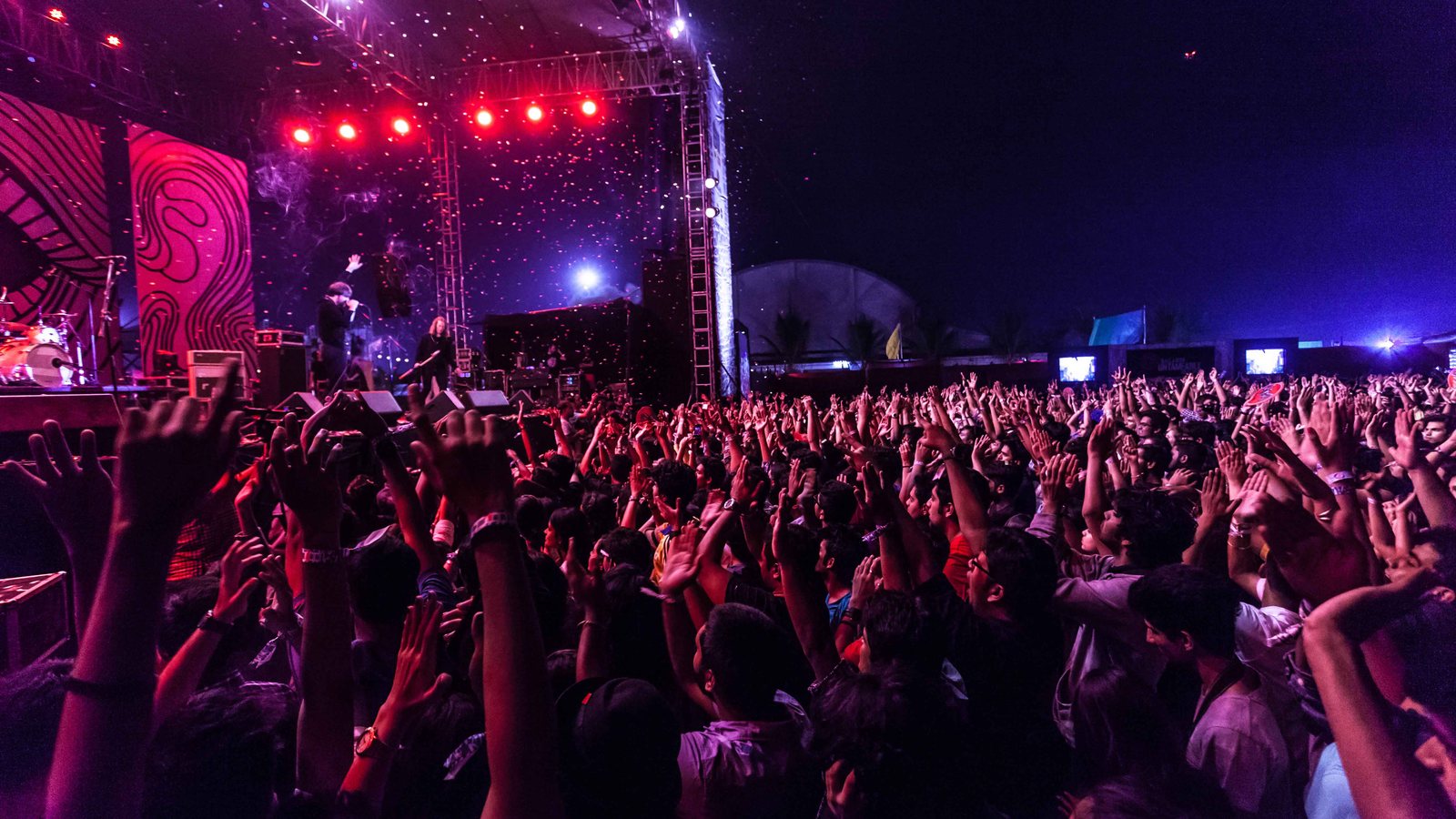
Sunburn is a commercial electronic dance music festival started by Shailendra Singh of Percept Ltd. Wikipedia records that it was held every year in Vagator, Goa, from 2007 to 2015, moved to Pune in 2016 and came back to Vagator in 2019. CNN named it one of the world's top 10 festivals in 2009. Wikipedia also cites a 2014 International Music Summit report calling Sunburn "as big as Tomorrowland and Ultra."
Serendipity Arts Festival
The Serendipity Arts Festival is held each year in Panaji over a week in late December. Sunil Kant Munjal founded it in 2016. Its programme spans art, theatre, music, literature, dance, food and crafts. Wikipedia reports 450,000 visitors in 2018, and the 2019 edition used 12 venues, including heritage buildings along the Mandovi river. Each edition has a new curatorial team.
For dates, see our Music Festivals in India 2026-27 calendar. Always confirm with official pages before you travel.
How to explore Goan music
- Start with mando, for the 19th-century roots.
- Hear Lorna and Chris Perry, for the Konkani jazz era.
- Go to a tiatr, if you're in Goa or Mumbai, to see Konkani music theatre live.
- Listen to Remo Fernandes, for English-language Indian pop.
- Learn the Goa trance story before your first festival.
- Plan for late December, when the Serendipity Arts Festival is held. Check festival dates every year.
What independent musicians can learn from Goa
- Language can be a niche and a strength. Konkani tiatr and Remo's English songs both found audiences that the mainstream ignored.
- Contracts can end careers. Lorna's 23-year absence is the hardest lesson in this guide.
- Scenes can grow without labels. Goa trance spread by tape trading before the industry caught on.
- Tourism is a double-edged stage. Big festivals bring crowds, but local artists still need stages of their own.
FAQ
What is traditional Goan music?
Mando, a Konkani song form that combines Goan and Western traditions, and tiatr, Konkani musical theatre first staged in 1892, are two of the most important traditional forms.
Who is the "Nightingale of Goa"?
Lorna Cordeiro, a Konkani singer who performed with Chris Perry's band in the 1960s and 1970s and returned to music in 1995.
What is Goa trance?
It is an electronic dance music style that emerged in Goa in the early 1990s. It grew out of an underground tape-sharing DJ scene, and psytrance later developed from it.
Is Sunburn held in Goa?
Sunburn was held in Vagator, Goa, from 2007 to 2015, moved to Pune in 2016 and returned to Vagator in 2019, according to Wikipedia. Check official sources for the current year.
Related on Discography
- Music Festivals in India 2026-27
- IPRS, PPL and Novex: Licensing for Indie Musicians
- Indian Indie Languages
- The Independent Music Scene in India, 2026
Sources
- Wikipedia: Annexation of Goa
- Wikipedia: Mando (music)
- Wikipedia: Tiatr
- Wikipedia: Chris Perry (musician)
- Wikipedia: Lorna Cordeiro
- Wikipedia: Remo Fernandes
- Wikipedia: Goa trance
- Wikipedia: Sunburn Festival
- Wikipedia: Serendipity Arts Festival
- Wikimedia Commons: Remo Fernandes in 2013
Cover photo: Joegoauk Goa / Wikimedia Commons (CC BY-SA 2.0).
Discography is an independent music magazineHow to get coveredRelease music in IndiaIndian indieIndian indie bandsAbout