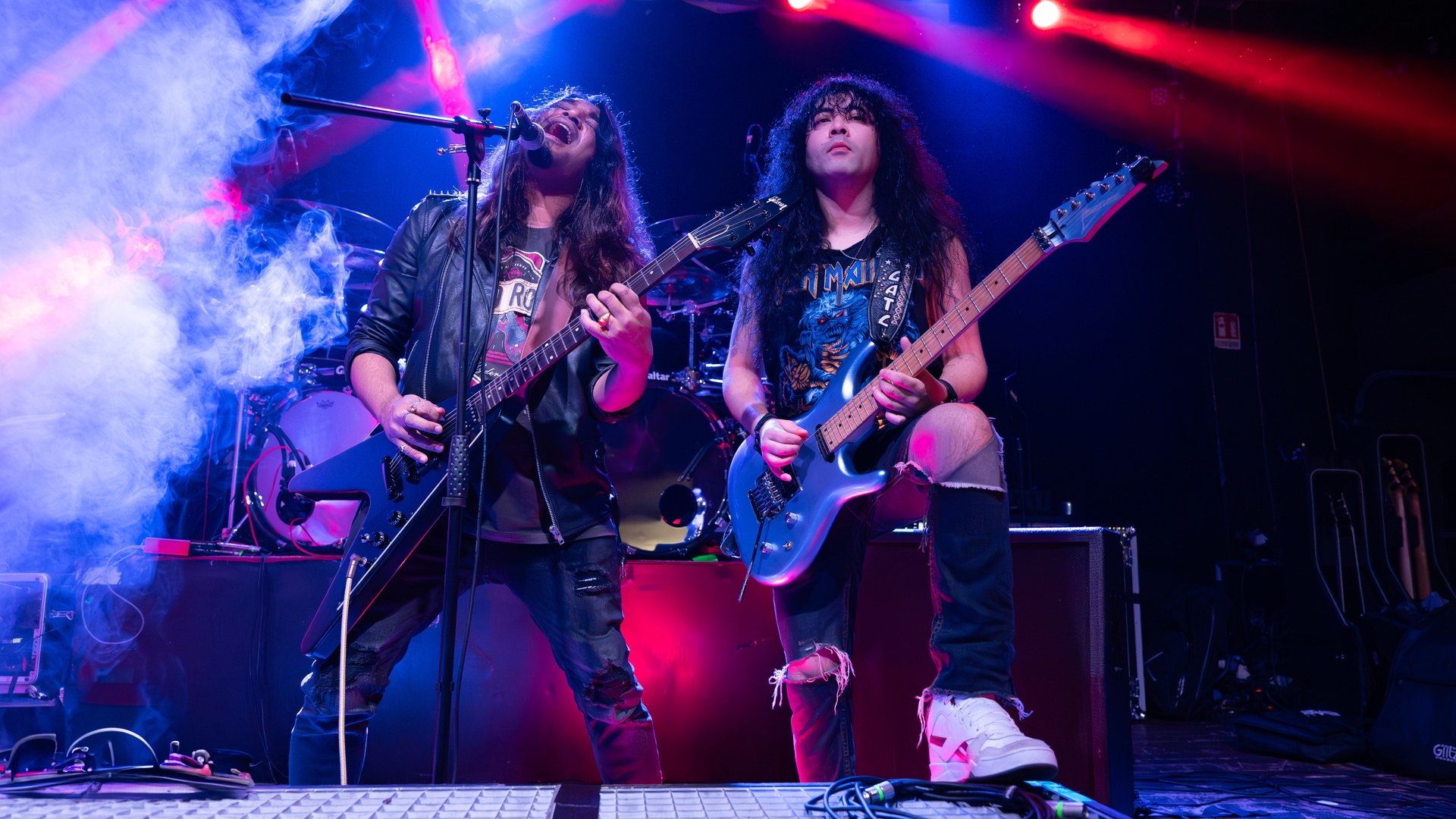
Banjaare, the Haryanvi duo of brothers Sumit and Anuj, have a song on Spotify's RADAR India and Indie India playlists that came out nine months ago and still refuses to leave. At our snapshot at 8:33 PM IST on 21 October 2026, Bairan was No. 7 on RADAR India and No. 7 on Indie India. Its official animated video on the Banjaare YouTube channel had 358,679,292 views when I checked tonight.
That number is the reason most people know the name. It is not the reason I wanted to write about them. What interests me is how Bairan got here: a self-released Haryanvi heartbreak song, put out as audio only after a music video fell through, that ended up licensed to Sony Music. It is a useful case for anyone who reads our piece on who ends up owning Indian indie masters, and the label question gets its own section below.
Banjaare at a glance
- Members: brothers Sumit (28) and Anuj (24), per Billboard India; they do not disclose a surname and ask to be known only as Banjaare (Billboard India, 2026)
- From: Bhiwani-born, recently based in Kurukshetra, Haryana (Billboard India)
- Started: began pursuing music professionally during Covid, with no formal training (India Today, March 2026)
- Early self-released singles: Suits with me (feat. Bulbul), 28 November 2024; Different Talk, 10 January 2025; Aashiq Awara, 20 April 2025; Mojj, 8 June 2025, each ℗ Banjaare on Apple Music
- Breakout: Bairan, release date 23 January 2026 on Spotify and Apple Music, now ℗ 2026 Sony Music Entertainment India
- Follow-up: Barsaat with Roni, 9 July 2026, ℗ 2026 Sony Music Entertainment India; used in the Indian campaign for Spider-Man: Brand New Day (Variety India, August 2026)
- On RADAR India and Indie India at 8:33 PM IST, 21 October 2026: Bairan, No. 7 on both
Two brothers, no surname, no training
Banjaare keep the biography short on purpose. Billboard India's Arunima Joshua noted that the brothers "do not disclose their surname, and request to be known together only by their alias". (Variety India's June interview calls them cousins; every other source I read, and their own YouTube description, says brothers, so I have gone with that.)
The name, they told Mirchi Plus in March, is about movement. "A banjara is someone who travels while carrying stories, and that's exactly why we chose the name Banjaare." Neither came from a musical family in the professional sense. Anuj told Mirchi that his grandfather sang and that his father helped him prepare Yashomati Maiya for a Republic Day function at school. Sumit told India Today that, according to his grandfather, he was humming a song from Gadar before he could talk, and added: "we never received any formal training". According to Billboard India, Anuj taught himself production from YouTube and plays harmonium and guitar, and the two have written and produced together on every single so far.
The part of their story I find most telling is the school one. "When we were younger, we would be fined for speaking Haryanvi in our school," Sumit told Variety India's Harshada Rege in August. A song in that language now sits at the same position on Spotify's two flagship Indian indie playlists, which is a quieter kind of revenge than most chart stories offer.
Bairan, the song nobody was listening for
By the duo's own account, Bairan started small. "Anuj sent me a snippet of him humming the song. He was hearing some alternative rock beat," Sumit told India Today. "I heard it and added more verses to it. Then we composed it the next day." The official video credits list Banjaare as singer, lyricist and composer, with music by Roni and mix and master by Gurie.
The release itself almost did not happen the normal way. The description under the official video on their channel says they shot a video in Chandigarh, were unhappy with the result, cancelled it and "uploaded only the audio through DistroKid, with no marketing, no plans". The same note says "No label. No big budget. Just two Brothers and a feeling." That is their telling, not something I can audit, but it matches what Sumit told Billboard India: "No one was listening before."
Then people did listen. Billboard India wrote in mid-2026 that Bairan had held No. 1 on its India songs chart for more than twelve weeks. Mirchi called it a song "popping up everywhere from Instagram Reels to daily playlists", and there is now a duet version with Simiran Kaur Dhadli (25 March 2026) and a VDJ Fly mashup on Apple Music that also credits Diljit Dosanjh and Shreya Ghoshal.
What does it sound like? The lyric is the first thing that lands. "Jit bhi gaya re, teri yaad khadi paayi manne" (wherever I went, I found your memory standing there) is a chorus line you understand on the first pass even if Haryanvi is not your language, which is the point Billboard India made about this being a softer, more accessible dialect. The duo told India Today that they had the old Punjabi romances in mind: "The reasons for the separation of Heer and Ranjha were the very same reasons that cause two lovers to part ways today."
The sound is another matter, and this is where my opinion comes in. I ran Apple Music's 30-second preview through a level and frequency meter. Second by second, the clip barely moves: its loudness stays within about 2 dB from start to finish, and close to half of its energy (47.6 percent) sits below 120 Hz. The stereo image is narrow too. In plain terms, it is a wall of beat and low end, with the voice and flute riding on top. On a phone speaker or in a Reel, that works brilliantly. On headphones, I wanted the arrangement to breathe once, just for a bar, before the chorus came back.
Barsaat, and the Spider-Man detour
Barsaat, released on 9 July 2026 and credited on Apple Music to Banjaare and Roni, is written as the other half of Bairan, from the woman's side. Its official video had 133,920,246 views tonight. The video's description lays out the song as a move through denial, pain and, finally, acceptance, and its credits put music to "Roni x Banjaare", with Gurie again on mix and master.
Variety India reported that the song was picked for the Indian promotional campaign of Spider-Man: Brand New Day, which meant reworking a woman's lament into Peter Parker's loneliness. "We wanted to ensure that its soul doesn't die," Sumit said. Anuj: "We rewrote it so that even if people hear it apart from the movie, they still find it whole."
On my meter, Barsaat is the more interesting record. Its preview has a range of about 5 dB rather than 2, low end at about 29 percent of the energy instead of nearly half, and a noticeably wider stereo spread. It sounds like a duo who heard Bairan back and made more room. If you only know one Banjaare song, play this one second.
Are Banjaare independent?
Partly, and honestly it depends on which song you mean. Their four early singles that I checked, from Suits with me (2024) to Mojj (2025), carry a ℗ Banjaare line on Apple Music, which means they own those recordings. Haaye Re (November 2025), a collaboration with Swati Shukla and MaxxTurnn, is ℗ 2025 Geet MP3 Haryanvi.
Bairan is different now. Billboard India reported that the viral track "was eventually acquired and distributed by Sony Music", and the current Bairan single on Apple Music is ℗ 2026 Sony Music Entertainment India Pvt. Ltd. Barsaat and the Bairan duet carry the same line. The duo told Billboard India they are not signed and are "partnering with Sony Music for licensing their upcoming releases over the next one year". Sumit explained waiting on a full deal with a line about saving gunpowder until a fire actually needs it: "Jab barood ki jarurat padegi aag jalane ke liye."
So: an independently made, originally self-released song that is now on a major label's ℗ line, by a duo who are not signed but are in a licensing deal with that same major. RADAR India and Indie India both still file it as indie. That is a fair description of the making, and a generous one of the business, and it is exactly the grey zone we wrote about in how Spotify's playlists act as gatekeepers. It also reads, from the other side, like the success case for releasing music without a record label: self-release first, negotiate after the audience shows up.
Where Banjaare go next
Our long read on the regional sounds reshaping Indian music mentioned Haryanvi in passing. Banjaare make the stronger argument for it. In June, Anuj told Variety India's Amit Gurbaxani that electronic music was "the next step", and that they had "a bank of about five to seven songs". He also said the first five songs on his playlist were by Skrillex, with Chaar Diwaari's Iss Tarah after them, which is a hint at where the production might go.
My honest view is that the songwriting is already there and the next record should take a risk with space rather than with genre. Their father's advice after Bairan blew up, as Sumit told Variety India in June, was to "work as if our next five songs had flopped". I hope they take him at his word. The duo who wrote that chorus can afford to make a quieter one.
FAQ
Who are Banjaare?
Banjaare is a Haryanvi music duo of two brothers, Sumit and Anuj, who were born in Bhiwani and recently based in Kurukshetra, Haryana. They do not disclose their surname. They are best known for Bairan (2026) and Barsaat (2026).
Who sang Bairan?
Bairan is by Banjaare. The official video credits Banjaare as singer, lyricist and composer, with music by Roni and mix and master by Gurie. A duet version with Simiran Kaur Dhadli was released on 25 March 2026.
Is Bairan on RADAR India?
Yes. At 8:33 PM IST on 21 October 2026, Bairan was No. 7 on Spotify's RADAR India and No. 7 on Indie India.
Which label is Banjaare signed to?
Banjaare told Billboard India in 2026 that they are not signed to a label, but they have a licensing partnership with Sony Music for their upcoming releases. Bairan, its duet version and Barsaat are ℗ 2026 Sony Music Entertainment India on Apple Music; their earlier singles are ℗ Banjaare.
What is Barsaat by Banjaare about?
Barsaat, released on 9 July 2026, tells the story of Bairan from the woman's side. A reworked version was used in the Indian promotional campaign for Spider-Man: Brand New Day, according to Variety India.
Sources
- Spotify RADAR India and Indie India playlist snapshots, 8:33 PM IST, 21 October 2026: https://open.spotify.com/playlist/37i9dQZF1DWTAtTdFMiJYK and https://open.spotify.com/playlist/37i9dQZF1DX5q67ZpWyRrZ
- Billboard India, Arunima Joshua, "Before 'Bairan' Nobody Was Listening to Banjaare", 2026: https://billboardind.com/before-bairan-nobody-was-listening-to-banjaare/
- India Today, Priyanka Sharma, "Heartbreak gets Haryanvi strains: Indie duo Banjaare decode their viral hit Bairan", 20 March 2026: https://www.indiatoday.in/entertainment/music/story/heartbreak-gets-haryanvi-strains-indie-duo-banjaare-decode-their-viral-hit-bairan-2884142-2026-03-20
- Mirchi, "Banjaare on Bairan, heartbreak and the meaning behind their name", 25 March 2026: https://mirchi.in/stories/music/banjaare-duo-bairan-viral-haryanvi-song-interview-exclusive/153918439
- Variety India, Amit Gurbaxani, 2 June 2026: https://varietyindia.com/bairan-hitmakers-banjaare-want-shah-rukh-khan-and-kajol-in-their-music-video/
- Variety India, Harshada Rege, 25 August 2026: https://varietyindia.com/haryanvi-duo-and-hitmakers-banjaare-on-spider-man-barsaat-and-bairan-we-make-music-for-the-heart-not-the-charts-exclusive/
- Bairan official video and credits, Banjaare channel: https://www.youtube.com/watch?v=oafxkMv4xnc
- Barsaat official video and credits, Banjaare channel: https://www.youtube.com/watch?v=ebZj_nrmH-c
- Apple Music release data, ℗ lines and 30-second previews: https://music.apple.com/in/artist/banjaare/1782253872
- Banjaare on Spotify: https://open.spotify.com/artist/7IbxsPdlYelceWNyHAor55
Cover: Sumit and Anuj of Banjaare, from the official artist photo on the Banjaare Spotify artist page (photographer not credited); centred on a blurred, darkened extension of the same photo at 1200x630 by discography.in. Source: https://open.spotify.com/artist/7IbxsPdlYelceWNyHAor55.
Discography is an independent music magazineHow to get coveredRelease music in IndiaIndian indieIndian indie bandsAbout